


Range Hood Heat Sensor Repair
Testing the sensor that starts the fan by itself when the burners get hot, so the hood starts when it should and stops when the heat is gone.
Mon–Sat, 8am–8pm
- Low cost band
- 5 steps on the visit
- 4 problems it answers
Book a visit
Three short steps, about a minute.
or call (844) 398-3217
Loading appointment form…
The appointment form couldn’t load. Please try again.
What the range hood heat sensor repair
involves.
Many range hoods carry a heat sensor, a thermostat disc or an electronic probe mounted in the canopy above the burners. When the air rising into the hood passes a set temperature, it starts the fan, often at a higher speed, to protect the hood's electronics and carry the heat away, and it keeps it running until the canopy cools again. Some makers call this heat sentry or auto mode; on others it simply happens and cannot be switched off while the heat lasts. That behavior surprises people, and a visit sometimes ends with nothing broken: a pot left simmering, or the heat of a wall of hot pans, keeps the fan going exactly as designed. When the sensor fails, though, the fan starts with the burners cold, will not switch off, or never starts on its own at all. A sensor coated in grease can read wrong; a disc thermostat can stick closed; a probe can drift out of range or lose its connection to the board. The sensor is read cold and warmed, its wiring checked, and the board's response to it confirmed. A failed sensor is replaced, and the automatic mode is shown to you working as the maker intended.
How the visit goesWhat it usually costsLow · Heat sensor or thermostat disc and its lead
The sensor is a small part fitted from the underside of the canopy. When the board that reads it has also failed, the job joins the control board row instead.
Answers 4 problemsRange Hood Fan Won't Turn Off
Range Hood Buttons or Keypad Not Responding · Reading a Range Hood Error Code or Blinking Light · Hot Electrical or Burning Smell at the Range Hood
Comes up most onIsland range hood
Wall-mount range hood · Range hood insert · Under-cabinet range hood
Codes that lead hereAuto · Fan key backlight flashes slowly · CArE · Indoor Air Quality (IAQ) LED changing color
Bosch "Auto" on a wall hood: overheating protection has taken over the fan.
Range hood heat sensor repair,
step by step.
Warm the sensor safely to show the fan starts, then let it cool to show it stops, so you know what normal looks like.
Ask when the fan runs by itself and whether the burners were on, then check the hood's automatic and delay-off settings.
Remove the filters and find the heat sensor in the canopy, looking for grease, heat damage or a loose connection.
Cut the power and read the sensor cold, then warmed, and check its wiring to the board or the fan relay.
Replace a failed sensor or its lead, clean the area around it, and confirm the board answers the new part.
Warm the sensor safely to show the fan starts, then let it cool to show it stops, so you know what normal looks like.
The problems
it answers.
4 of them, from range hood fan won't turn off to hot electrical or burning smell at the range hood.
All problems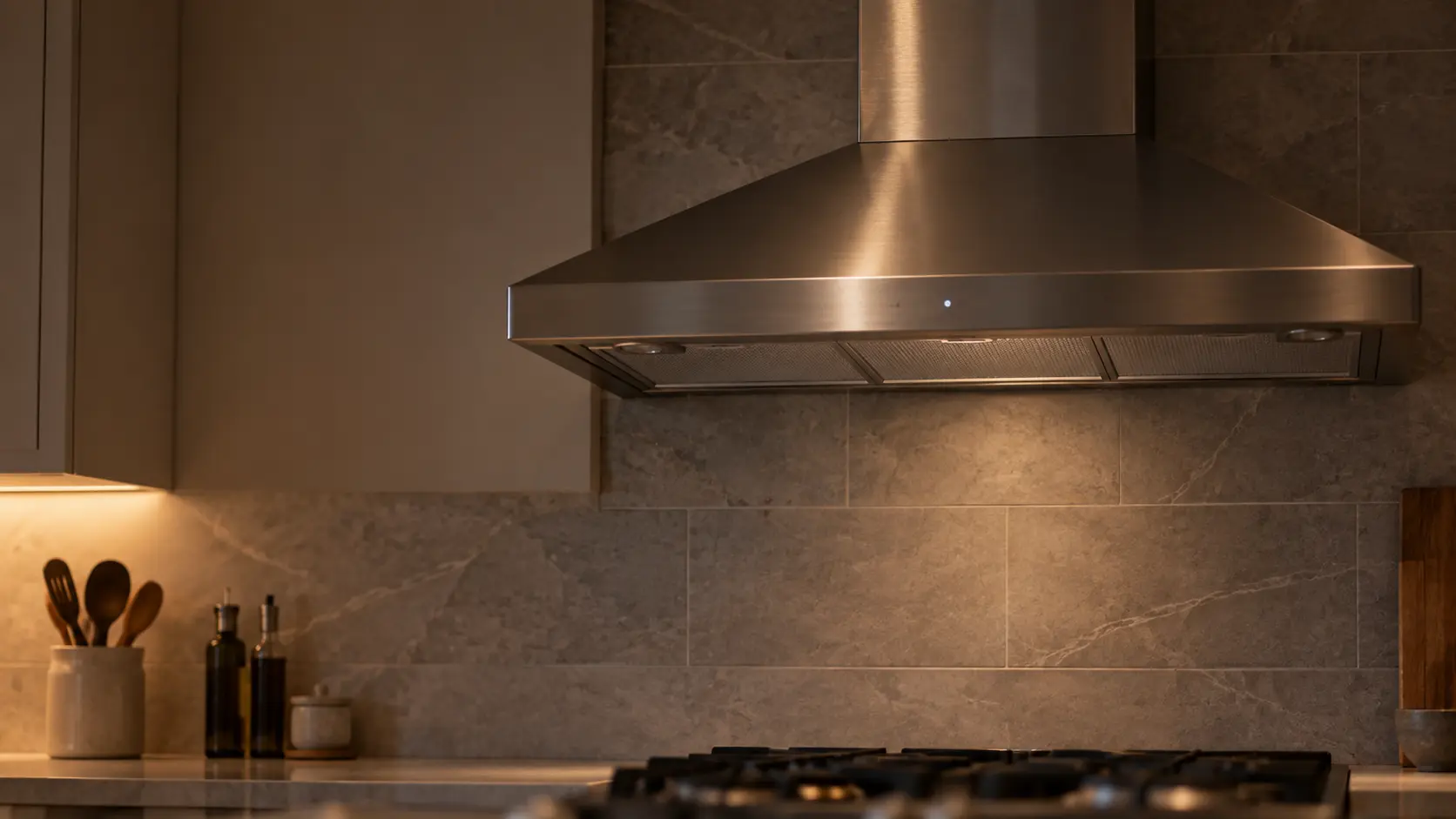
Range Hood Fan Won't Turn Off
6 causes, cheapest first
Before you call
Tell us this when you book
- Whether the fan starts by itself with the burners cold, or only while or after cooking
- Whether it refuses to switch off with the fan key, and how long it keeps running
- Whether the hood has an automatic, heat sentry or delay-off setting you know of
- Whether it began after a hot fry, a flare-up or a pot left to boil dry
It also answers
Low,
on the site's scale.
The sensor is a small part fitted from the underside of the canopy. When the board that reads it has also failed, the job joins the control board row instead.
Read the full cost guideWhere it
comes up most.
Most bookings: Island range hood, Wall-mount range hood, Range hood insert, Under-cabinet range hood.
All range hood types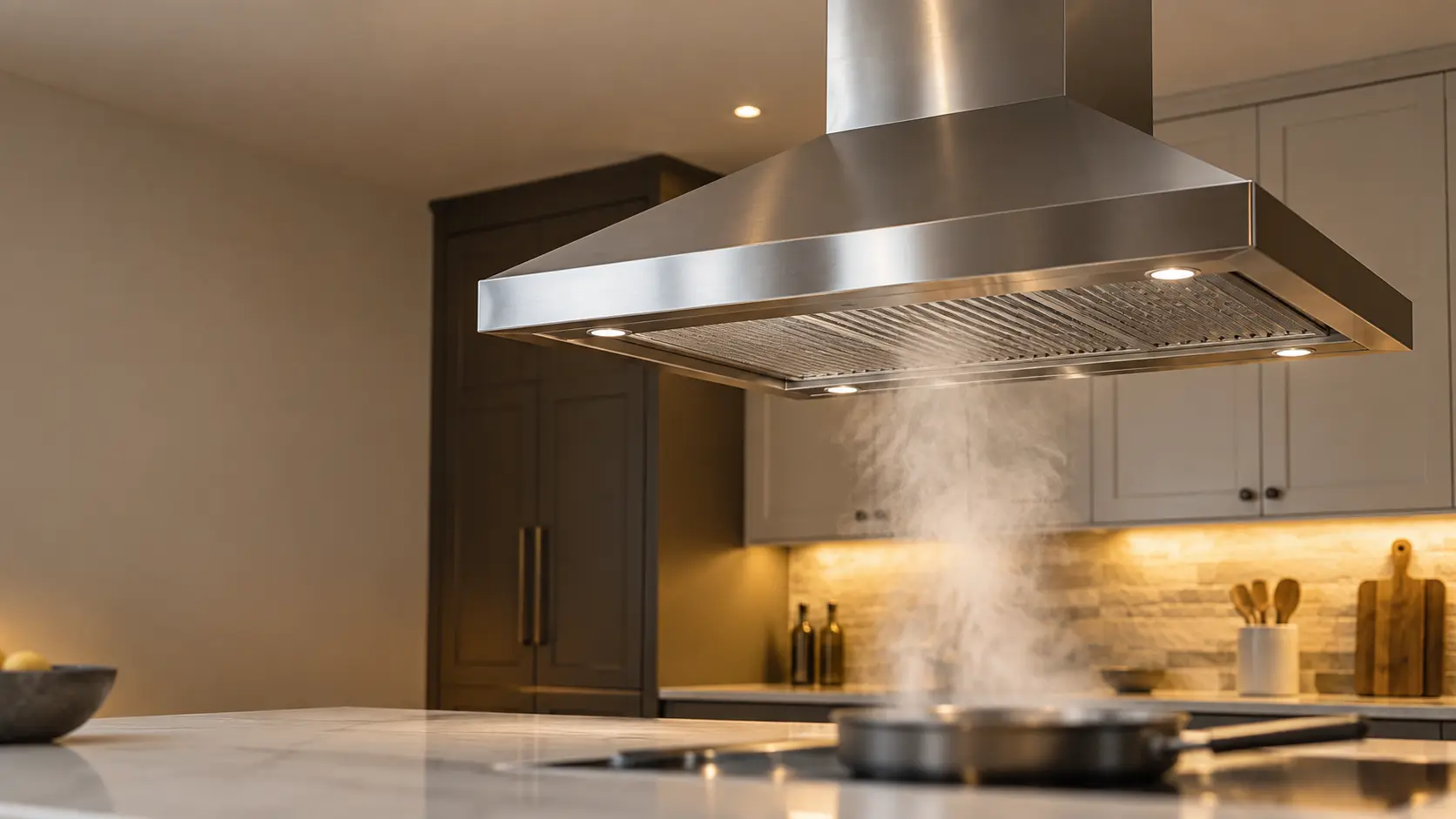

The makes
we see it on.
29 makes on this site, and the range hood heat sensor repair on any of them. Each mark opens that make's own page.
All 29 brandsRange hood heat sensor repair,
where we come out.
The kitchen, the climate and the building all change how the range hood heat sensor repair goes. These notes are about that, metro by metro.
All service areasTampa BayFL · 31 areas
In a hot Tampa Bay kitchen a hood's heat sensor may start the fan when a big pot boils below, which is the sensor doing its job; it is tested only when the fan starts with the burners off or will not stop once the hood has cooled.
OrlandoFL · 30 areas
Orlando rental owners sometimes find a hood fan running in an empty house between guests, and a heat sensor that has drifted can do that; the technician compares its reading with the hood's real temperature before replacing it.
Miami / South FloridaFL · 47 areas
Damp air in a closed South Florida condo can corrode a heat sensor's leads, and a hood that starts its fan by itself in an empty apartment is tested at that sensor and at the wiring that runs from it to the board.
New York MetroNY · 75 areas
A New York galley puts the hood close above the burners, where its heat sensor sees high temperatures quickly, so a fan that jumps to high on its own may be protecting the hood; the visit confirms that before calling it a failure.
HoustonTX · 36 areas
Houston cooks who sear over high gas flame raise the heat under a hood fast, and a sensor that sends the fan to high each time may be working as designed; one that starts the fan with every burner off is the one replaced.
ChicagoIL · 50 areas
A Chicagoland hood whose heat sensor has failed can leave the fan idle while a pan smokes below, a quiet failure owners tend to notice at a big holiday meal; the repair tests the sensor against a known heat and replaces it.
Los AngelesCA · 95 areas
Pro-style burners in Los Angeles designed kitchens throw strong heat into the hood, and its heat sensor starts the fan to protect the electronics; when it starts at low heat too, the sensor or its connection has drifted.
San DiegoCA · 31 areas
San Diego hoods near the shore can lose a heat sensor to salt on its terminals, and a fan that either runs on its own or ignores real heat is repaired with a new sensor and clean connections back to the board.
San Francisco Bay AreaCA · 74 areas
Several European hood makers sold in the Bay Area tie the heat sensor to automatic fan speeds, and a hood that no longer steps up as the pans heat is tested at that sensor and its setting before the board is questioned.

Questions about
the range hood heat sensor repair.
Why does my range hood fan turn on by itself while I cook?
Can I disconnect the heat sensor so the fan stays quiet?
The fan keeps running for a while after I turn it off. Is something wrong?
Back to your everyday
Ready to book the range hood heat sensor repair?
Have these to hand: whether the fan starts by itself with the burners cold, or only while or after cooking, whether it refuses to switch off with the fan key, and how long it keeps running, whether the hood has an automatic, heat sentry or delay-off setting you know of, whether it began after a hot fry, a flare-up or a pot left to boil dry.