
Grease Fire Under or Inside a Range Hood
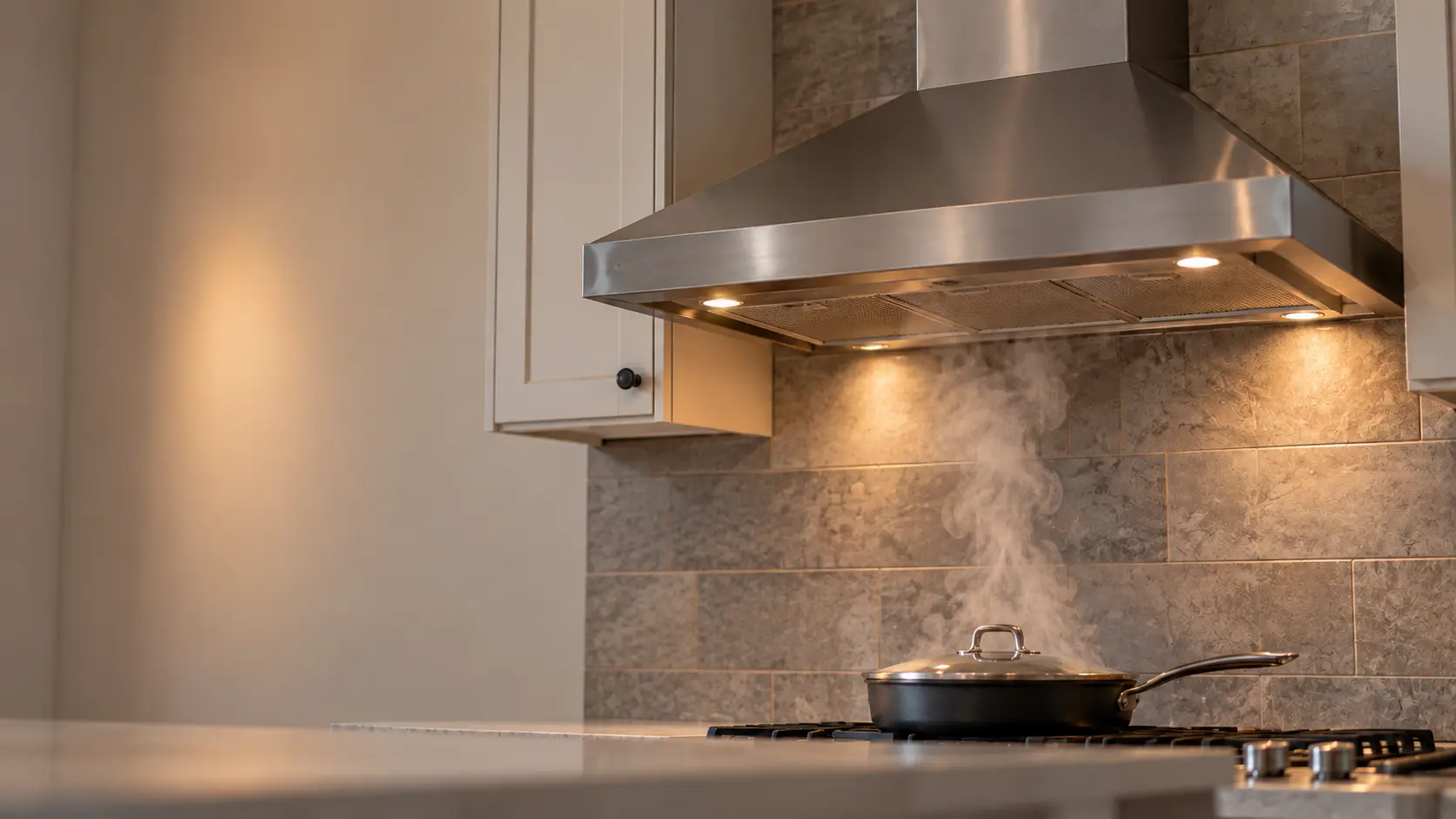
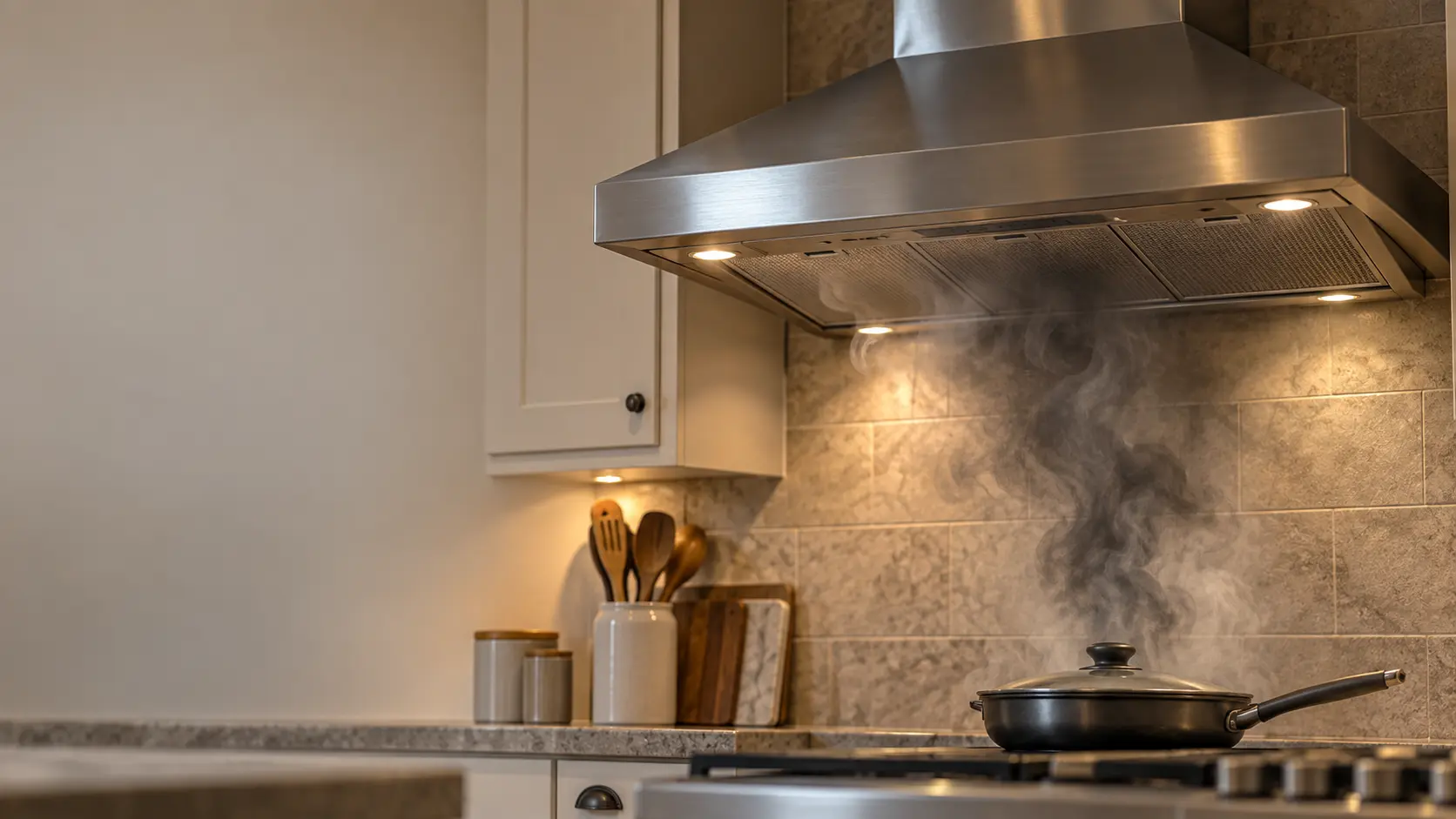
A range hood grease fire begins as a pan of oil that flares on the burner, then flame licks up toward the filters, or a glow and thick smoke appear behind the mesh where years of cooking fat have built up.
Mon–Sat, 8am–8pm
- Stop cooking under it
- 5 questions that narrow it
- 6 causes, cheapest first
Book a visit
Three short steps, about a minute.
or call (844) 398-3217
Loading appointment form…
The appointment form couldn’t load. Please try again.
Burner off, everyone back, then the breaker
Act first, book second: lid on the pan, burner off, never water, and out of the house with a 911 call if the fire has spread into the hood or the cabinets. After any fire that touched the hood, its breaker stays off and nobody cooks under it until the filters, the blower, the wiring and the duct have been looked at.
What it
usually means.
Every pan of bacon, stir-fry or deep-fried food sends a fine mist of fat upward, and the hood exists to catch it. Most of that mist lands on the mesh or baffle filters, but some always slips past and coats the inside of the canopy, the blower wheel and the first feet of the duct. On a hood that has not had its filters washed for a long time, that coating turns into a fuel layer sitting right above the flame. A fire nearly always starts in the pan: oil left on high heat passes its smoke point and then ignites by itself. The fire services give the same short list for that moment. Turn the burner off, slide a lid or a baking sheet over the pan and leave it covered until it is completely cool, and never pour water on burning fat, because the water flashes to steam and throws the oil and the flame across the kitchen. If the fire climbs into the filters, the hood or the cabinets, stop fighting it: get everyone out, close the kitchen door behind you, and call 911 from outside. Afterward the hood stays off until it is inspected, because heat can melt wire insulation, warp the blower housing and leave smoldering grease inside the duct where nobody can see it.
 The 6 causes, cheapest first
Answer these first
Did the flame stay in the pan, or did it reach the filters, the canopy or the cabinets beside the hood?
Is there smoke still coming from the filters or from the grille and seams of the hood after the pan fire went out?
Are the filters scorched, warped or melted, and is there soot on the ceiling or cabinet above the chimney cover?
When were the grease filters last washed, and when was the duct last looked at?
Does the hood show any damage now: a smell of hot plastic, lights that stay dark, a blower that makes a new sound?
Check these
before you book.
Range hood grease fire: 5 checks, and none of them costs anything.
Turn the burner off, slide a lid or a baking sheet over the burning pan, and leave it covered until it is completely cool.
Never pour water on a grease fire, and never carry the burning pan to the sink or out the door.
If the flame reaches the filters, the hood or the cabinets, get everyone out, close the kitchen door behind you and call 911 from outside.
Also worth checking
- Once the fire is fully out, switch off the hood's breaker and leave the hood off until it has been inspected.
- Take photos of the filters, the underside of the canopy and any soot, and note the model number from the label behind the filters.
The causes,
cheapest first.
6 things grease fire under or inside a range hood turns out to be, from oil in the pan overheated and caught to a hood too small or hung too low.
The cost guide-
01 no repair
Oil in the pan overheated and caught
Frying oil left on a high flame, a pan boiled dry with fat in it, or a splash onto an open burner is the start of almost every kitchen fire. When the lid put it out and nothing above the pan was touched, the hood itself may be unharmed, but it still deserves a look before it runs.
-
02 low
Grease-soaked filters took the flame
Mesh filters that have not been washed for months hold a layer of fat that burns once flame reaches it. Filters that scorched, bent or lost their frame are replaced, not cleaned, and the canopy behind them is checked for grease that also burned.
-
03 low to moderate
Grease built up inside the canopy and blower
Fat that gets past the filters coats the blower wheel, its housing and the inner walls of the canopy. After a fire that layer is cleaned out, and the wheel is checked for melted blades or a wheel that now wobbles.
-
04 moderate
Heat damage to the wiring and the controls
Flame at the underside of the hood reaches the light sockets, the switch module and the wires running to the blower. Brittle insulation, a switch that no longer clicks or lights that stay dark after the fire mean the electrical side is inspected before the breaker goes back on.
-
05 moderate to highest
A duct lined with years of fat
A long or level duct run collects grease that never drains, and flame drawn into it can keep burning out of sight. Any sign of smoke from the ceiling, the chimney cover or the outside cap after the pan fire is out is a reason to call 911 again, and the duct is inspected before the hood returns to use.
-
06 varies
A hood too small or hung too low
A canopy narrower than the burners, or one mounted lower than the maker's installation guide allows, sits in the heat plume of a big pan. It collects more grease and runs hotter; the fix is the right size and height, measured on a visit.
What else
it could be.
Most often confused with hot electrical or burning smell at the range hood, then grease or oily water dripping from the range hood.
All problemsCodes that come with it
Fan LED bar flashes slowly and fan speed cannot be changedBEST · Mode, not a failureSpeed 4 button flashing, speed 3 litBEST · Mode, not a failureCArEElica · Heat and grease sensorsMotor stops during high-heat cookingSirius · Heat and grease sensorsBlower jumps from LOW to full powerVent-A-Hood · Mode, not a failure
Also related


The makes
it happens on.
29 makes on this site; grease fire under or inside a range hood can show up on any of them. Each mark opens that make's own page.
All 29 brandsGrease Fire Under or Inside a Range Hood,
where we come out.
9 metros, each with its own page.
All service areasTampa BayFL · 31 areas
Miami / South FloridaFL · 47 areas
New York MetroNY · 75 areas
HoustonTX · 36 areas
ChicagoIL · 50 areas
Los AngelesCA · 95 areas
San DiegoCA · 31 areas

Questions about
grease fire under or inside a range hood.
The pan fire went out under the lid. Is the hood safe to switch on again?
Why is water so dangerous on burning fat?
Can a grease fire burn inside the duct without being seen?
How can the next grease fire be prevented?
Back to your everyday
Still seeing grease fire under or inside a range hood?
Book with what you checked above — 5 answers save the technician the first part of the visit.