


Range Hood Noise and Vibration Repair
Finding what makes a hood roar, rattle or shake, from a grease-heavy wheel or loose screws to a flapping damper, and quieting it at the source.
Mon–Sat, 8am–8pm
- Low to moderate cost band
- 5 steps on the visit
- 5 problems it answers
Book a visit
Three short steps, about a minute.
or call (844) 398-3217
Loading appointment form…
The appointment form couldn’t load. Please try again.
What the range hood noise and vibration repair
involves.
Every range hood makes some sound, and on high speed a strong one is loud by nature. What brings people to book is a change: a new rattle, a rising growl, a whistle, a buzz that comes and goes, or a hood that trembles. The sound usually tells where to look. A rhythmic thump that follows the fan speed points to a blower wheel thrown out of balance by grease or a bent blade. A metallic rattle often comes from a filter that is not seated, a loose lamp lens, a panel screw or the chimney cover itself. A growl or squeal is the motor bearings. A whistle can be a filter with a gap around it or a duct that narrows too sharply. A tapping near the top that happens with the fan off is the damper or the outside flap moving in the wind. And a hum that seems to come from the whole hood can mean its mounting has worked loose from the wall or the ceiling, which is a safety matter, not just a noise. The visit runs the hood at each speed, isolates the source by removing parts one at a time, and fixes the cause, whether that is a clean and balanced wheel, new mounts, bearings, or snug screws and gaskets.
How the visit goesWhat it usually costsLow to moderate · Rattles, hum and vibration: wheel balance, mounts, gaskets and screws
Tightening loose panels, reseating filters and adding gaskets costs little beyond the visit. A new motor mount, a replacement wheel or bearings moves it up, and a mounting that has worked loose from the wall or ceiling is priced on sight.
Answers 5 problemsRange Hood Too Loud: Roar, Whine or Grinding
Range Hood Rattles or Shakes While It Runs · Cold Draft or a Flapping Damper Through the Range Hood · Range Hood Pulling Away From the Wall or Ceiling · Range Hood Runs but Barely Pulls Smoke
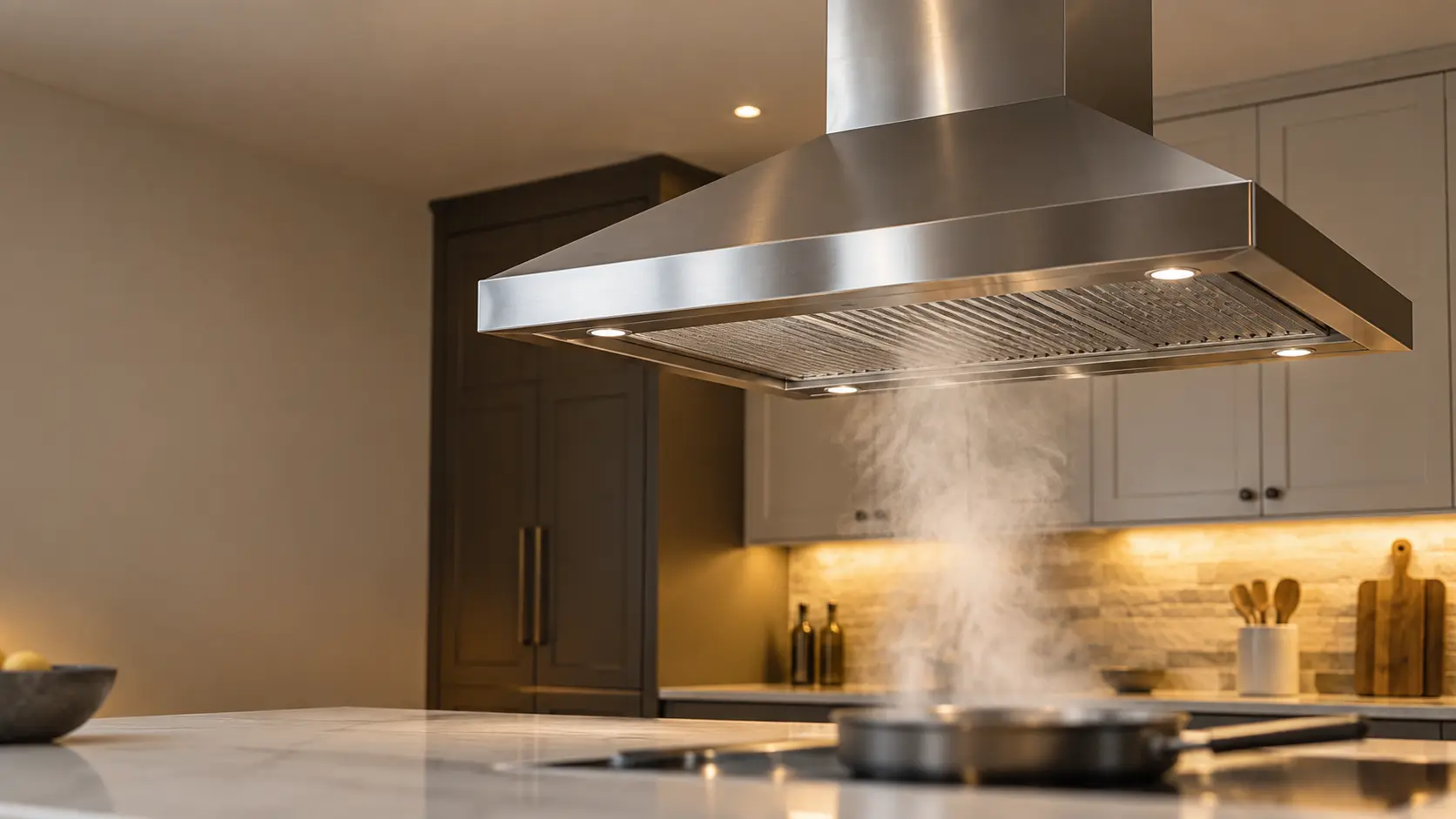
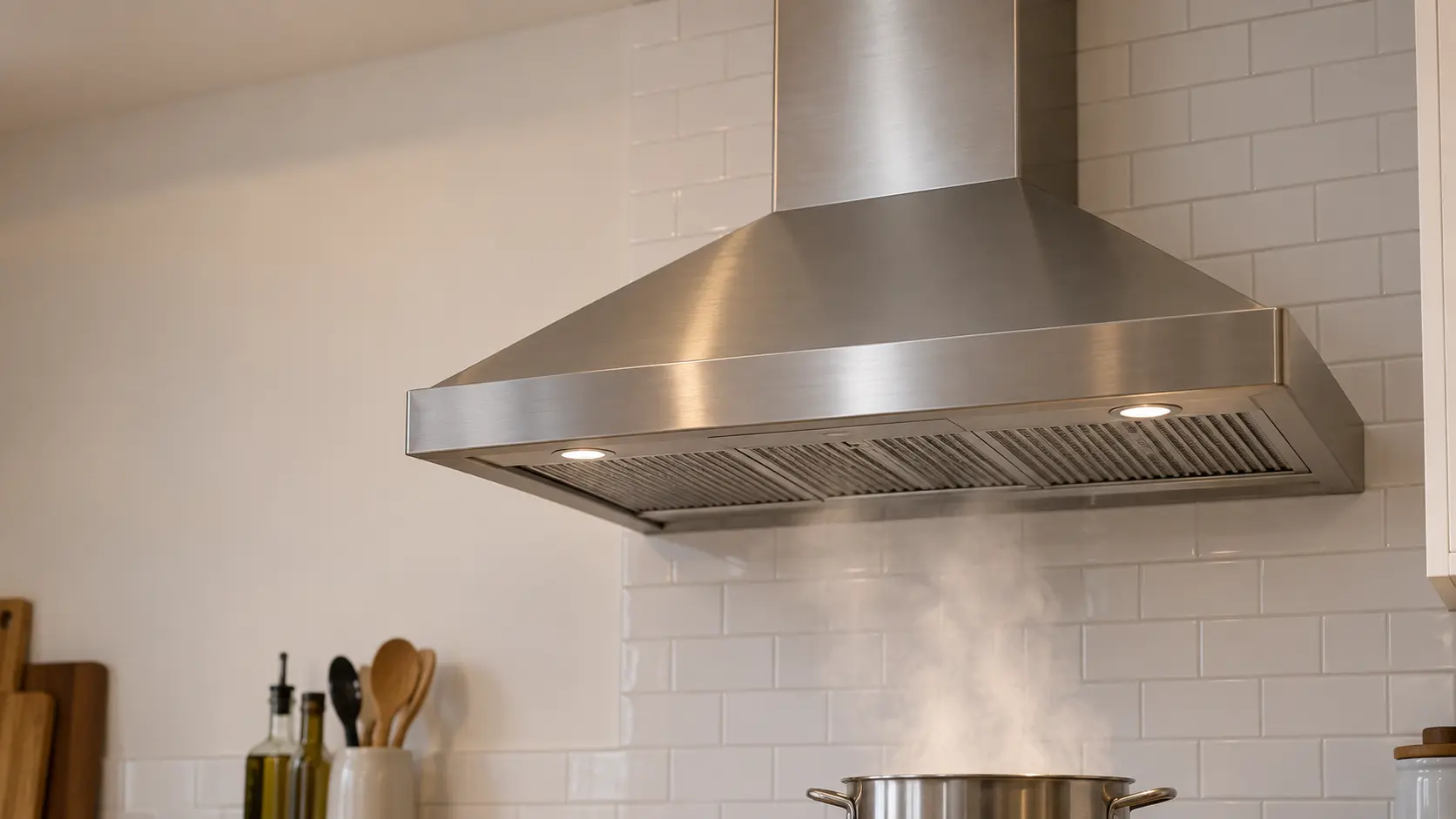
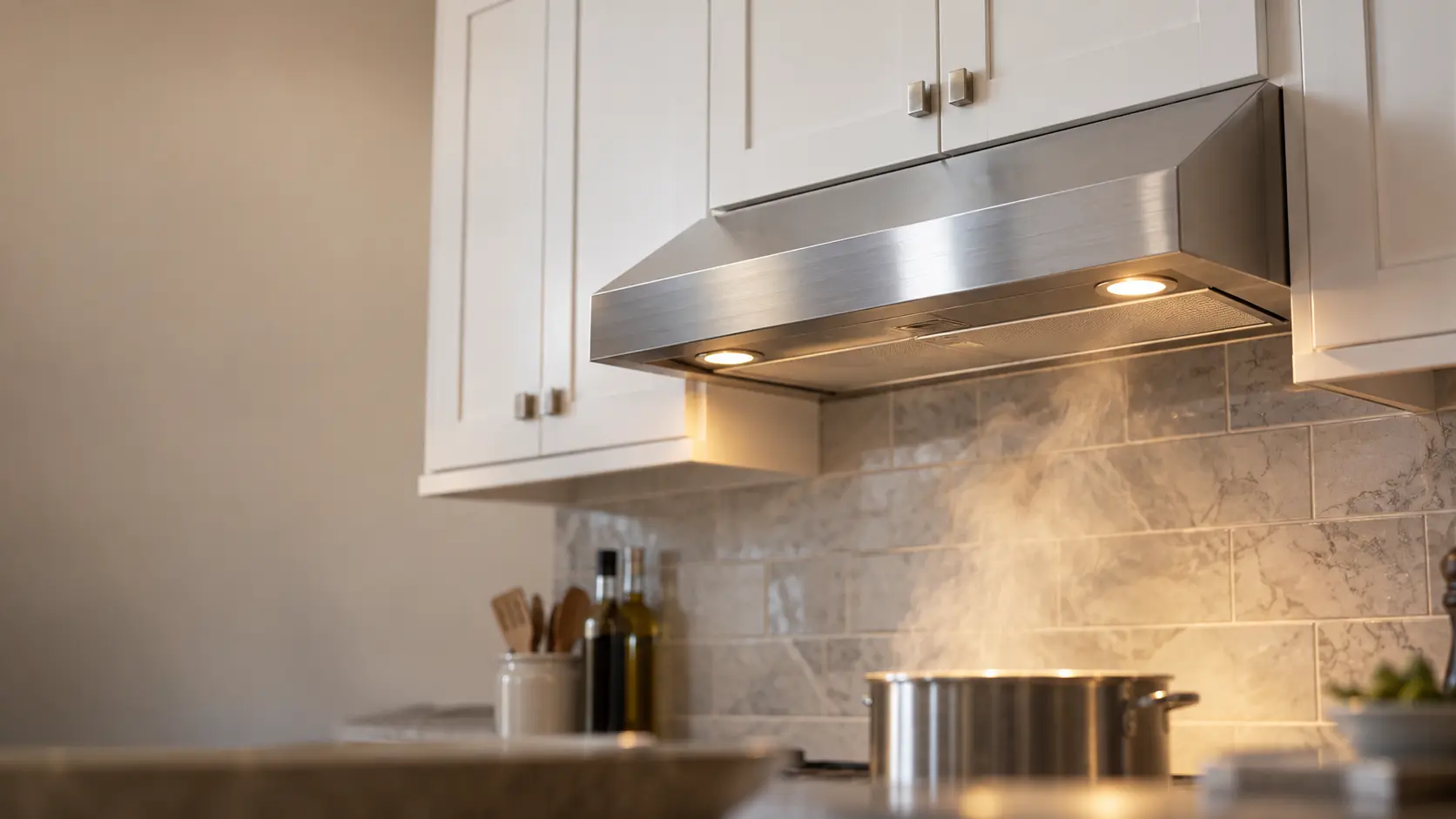
Comes up most onIsland range hood
Wall-mount range hood · Under-cabinet range hood · Range hood insert
Range hood noise and vibration repair,
step by step.
Run it again through every speed with you listening, so you hear the change and know what normal sounds like.
Run the hood at each speed and describe the noise with you, then listen at the canopy, the cover and the duct.
Remove the filters and lenses and retry, then check every panel screw, the chimney cover and the mounting for movement.
Cut the power and spin the blower wheel by hand for balance, rub or bearing roughness, and check the motor mounts.
Clean or replace the wheel, renew worn mounts or bearings, tighten or gasket loose parts, and free a tapping damper.
Run it again through every speed with you listening, so you hear the change and know what normal sounds like.
The problems
it answers.
5 of them, from range hood too loud: roar, whine or grinding to range hood runs but barely pulls smoke.
All problems
Range Hood Too Loud: Roar, Whine or Grinding
6 causes, cheapest first
Before you call
Tell us this when you book
- What the noise sounds like: a rattle, a growl, a whistle, a hum or a thump, and on which speeds
- Whether it happens with the fan off, in wind or rain, as well as when the hood runs
- Whether the hood or its cover moves when touched, or has shifted from where it was
- Whether filters were recently cleaned or anything was taken apart before the noise began
It also answers
Low to moderate,
on the site's scale.
Tightening loose panels, reseating filters and adding gaskets costs little beyond the visit. A new motor mount, a replacement wheel or bearings moves it up, and a mounting that has worked loose from the wall or ceiling is priced on sight.
Read the full cost guide| Repair | Relative cost |
|---|---|
| Blower motor, run capacitor, bearings or blower wheel | |
| Rocker or slide switch, key panel, touch strip or wall keypad | |
| Control board with its relays and power supply | |
| Lamps, sockets, lens covers or the LED driver | |
| Mesh or baffle filters, charcoal pads and the grease channel | |
| Backdraft damper, duct joints or the outside cap flap | |
| Rattles, hum and vibration: wheel balance, mounts, gaskets and screws | low to moderate |
| Downdraft lift motor, drive gears, limit switches or its blower | |
| Heat sensor or thermostat disc and its lead |
Where it
comes up most.
Most bookings: Island range hood, Wall-mount range hood, Under-cabinet range hood, Range hood insert.
All range hood typesOften the same visit
The makes
we see it on.
29 makes on this site, and the range hood noise and vibration repair on any of them. Each mark opens that make's own page.
All 29 brandsRange hood noise and vibration repair,
where we come out.
The kitchen, the climate and the building all change how the range hood noise and vibration repair goes. These notes are about that, metro by metro.
All service areasTampa BayFL · 31 areas
Around Tampa Bay a hood that rattles in a storm is usually its wall cap flap slapping in the wind, while a roar that grows over the months points to bearings rusting in the humid air, and the repair tells the two apart first.
OrlandoFL · 30 areas
Orlando rental hoods get their filters pulled out and pushed back crooked, and a filter out of its track buzzes in the blower's airstream; the repair reseats the filters, tightens the fasteners and checks the blower wheel for wobble.
Miami / South FloridaFL · 47 areas
A hood in a South Florida tower can drone through a long duct run to the building's exhaust, and part of that noise is the duct itself; the repair isolates the hood from the duct with a proper connector and balances the blower wheel.
New York MetroNY · 75 areas
In a small New York apartment every hum from the hood fills the room, and a blower that has begun to whine or tick usually has worn bearings or a wheel rubbing its housing; the repair replaces those parts rather than the whole hood.
HoustonTX · 36 areas
Houston island hoods on tall chimney covers can shake when the blower wheel is caked with grease, and the whole cover hums at high speed; the repair cleans or replaces the wheel and checks the ceiling mount the hood hangs from.
ChicagoIL · 50 areas
Wind off the lake can slam a Chicagoland hood's wall cap flap on stormy nights, and a clatter from the hood while the fan is off is that flap; the repair fits a weighted or spring-loaded damper that stays shut in the wind.
Los AngelesCA · 95 areas
Los Angeles lies in a seismic zone, and a hood that began to rattle after a quake may have loosened its mounting screws or its chimney cover; the repair sets the mount firmly into framing before any blower part is changed.
San DiegoCA · 31 areas
In San Diego a hood that squeals on start in a coastal house usually has salt-rusted bearings, while a hum that grows in an inland kitchen after heavy summer cooking points to a grease-laden wheel; the repair tests which one it is.
San Francisco Bay AreaCA · 74 areas
Bay Area houses in this seismic zone can shift a heavy island hood on its ceiling mount over the years, and a hood that now hums or knocks at high speed is checked at its brackets and anchors as well as its blower.

Questions about
the range hood noise and vibration repair.
How loud is too loud for a range hood?
My hood rattles only after I clean the filters. Why?
Should I worry if the whole hood shakes when it runs?
Back to your everyday
Ready to book the range hood noise and vibration repair?
Have these to hand: what the noise sounds like: a rattle, a growl, a whistle, a hum or a thump, and on which speeds, whether it happens with the fan off, in wind or rain, as well as when the hood runs, whether the hood or its cover moves when touched, or has shifted from where it was, whether filters were recently cleaned or anything was taken apart before the noise began.