


Start with what you own
Range hood
types,
told apart.
Steam from the same pot of pasta can rise into four quite different hoods. A wall-mount chimney hood sends it up a tall stainless cover to a duct, an under-cabinet hood works in the few inches below the cupboards, an island hood hangs from the ceiling with open air on every side, and an insert sits hidden inside a custom wood or plaster hood with its blower sometimes out on the roof. Knowing which one is yours narrows the search before the technician arrives.
Mon–Sat, 8am–8pm
- 4 types
- Serviced in place
- What each one costs
Book a visit
Three short steps, about a minute.
or call (844) 398-3217
Loading appointment form…
The appointment form couldn’t load. Please try again.
Four types,
each its own job.
Each one is built, reached and repaired differently. Open yours for what fails on it and what the work involves.
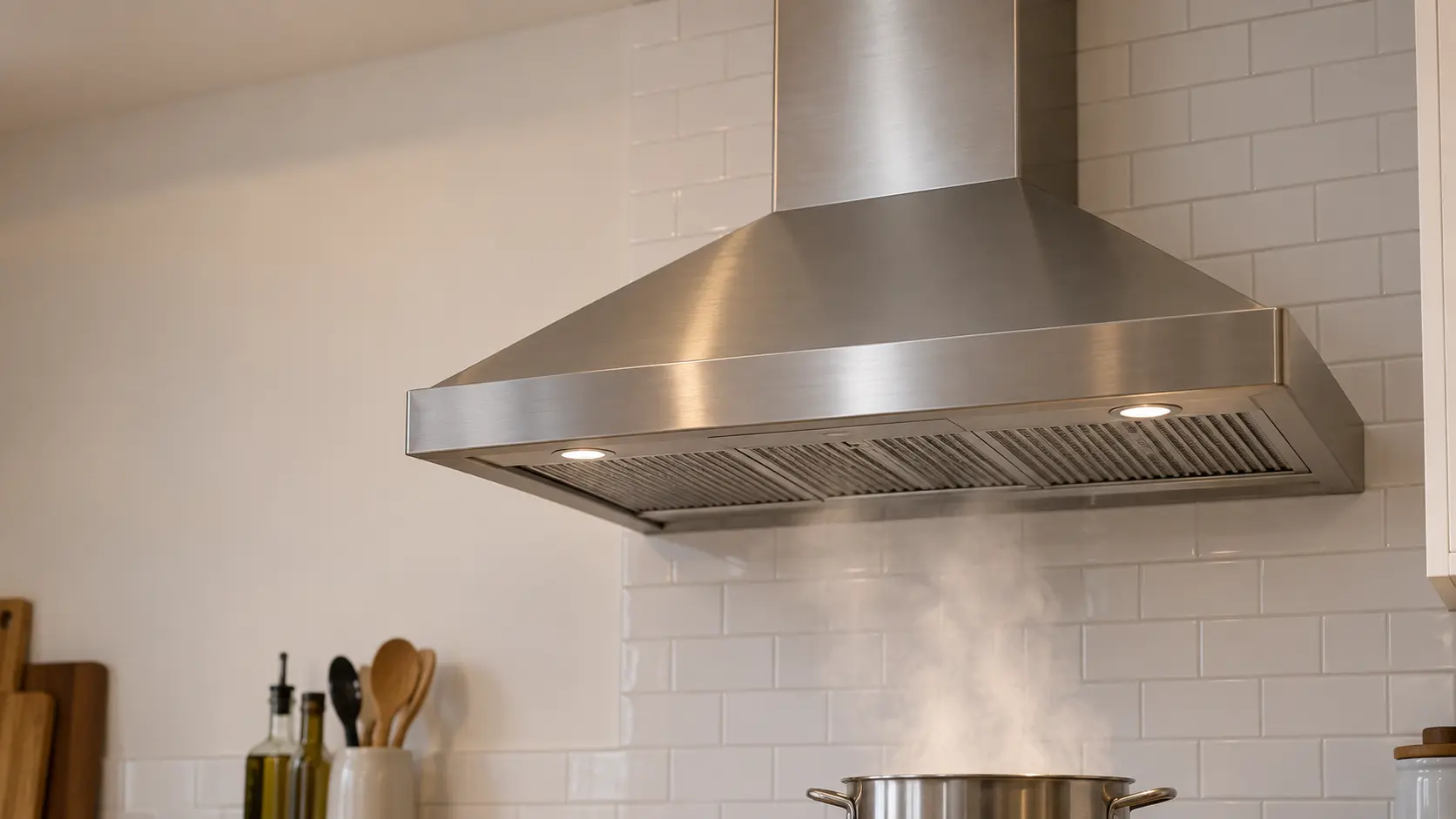
Wall-mount range hood
The chimney hood fixed to a bare stretch of wall above the burners, its canopy catching the rising smoke while a telescoping cover hides the duct that climbs to the ceiling.
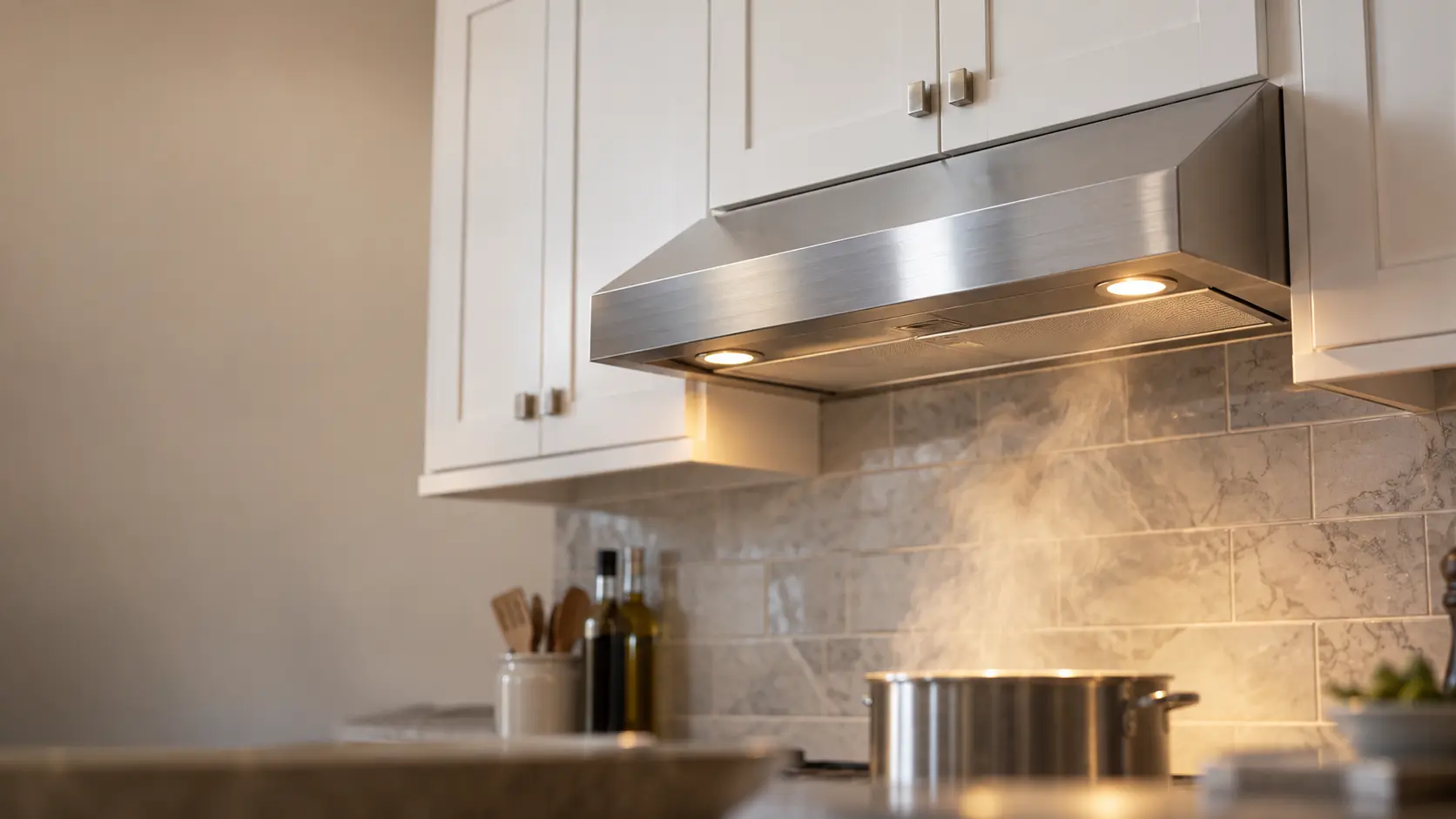
Under-cabinet range hood
The slim hood screwed to the bottom of the wall cabinet over the burners, venting up through that cabinet or back through the wall, or cleaning the air and returning it to the room.
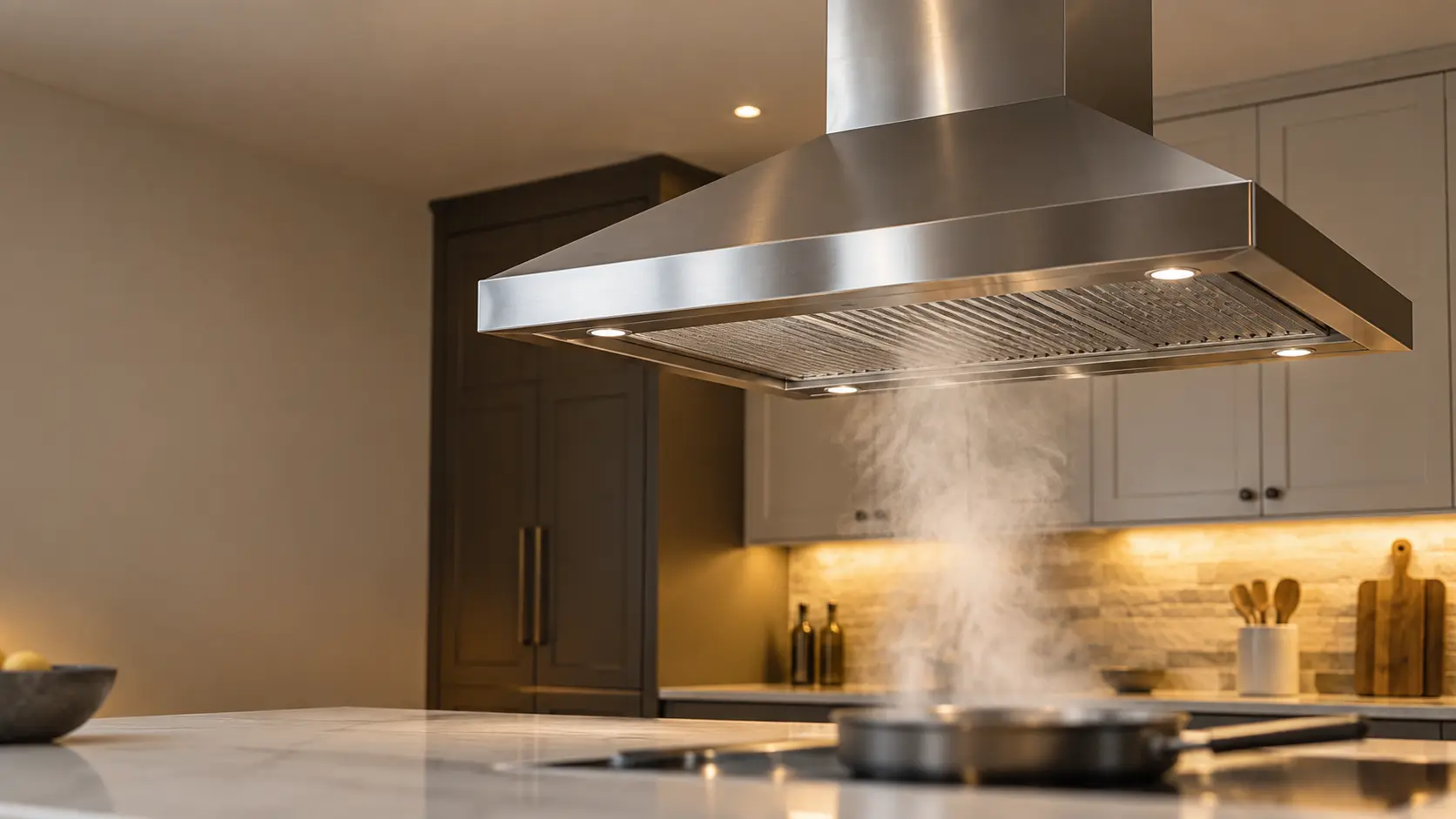
Island range hood
The hood that hangs from the ceiling over burners set into a kitchen island, open on all four sides, with its duct and wiring hidden inside a chimney that drops from above.

Range hood insert
The working core of a custom hood: a steel liner or power pack carrying the blower, filters, lights and controls, fitted inside a hood built of wood, plaster or metal by a cabinetmaker.
Not sure which you have?Start from what it is doing
If the range hood in your kitchen does not obviously match one of these, work from the symptom instead. It reaches the same answer from the other end.
17 problemsIn order of costWhat to check first Go to the problemsWhich one
is yours?
One look at the range hood usually settles it. The first sign of each type is on the right; its page has the rest, and what that type means for a repair.
Wall, island or insertWall-mountWall-mount range hood
Nothing but wall and tile sits above the canopy: a narrow rectangular cover climbs straight from its top to the ceiling.
Under-cabinetUnder-cabinet range hood
A wall cabinet sits directly on top of the hood, and the hood's front edge lines up with the cabinet doors above it.
IslandIsland range hood
The hood hangs free over burners set into an island or peninsula, with open room on all four sides of the canopy.
Insert or linerRange hood insert
The hood looks like furniture or masonry, a wooden mantel, a plaster curve or a hammered metal shell, rather than a stainless appliance.
What a repair
usually costs.
Set the repair against what a new range hood would really take to put up, not just its price on a shelf. A chimney hood needs its brackets, duct collar and tile cut to line up again; an island model comes down from the ceiling frame with two people; an insert has to fit the opening a cabinetmaker built around it. Filters, lamps, switches, dampers, capacitors and heat sensors are small next to that, and even a blower or a board is usually the better choice on those three. A basic recirculating under-cabinet hood is the exception: it is quick to swap, so on an older one with a failed motor the technician shows you both numbers side by side.
| Repair | Relative cost | Notes |
|---|---|---|
| Blower motor, run capacitor, bearings or blower wheel | moderate to highest | A capacitor or a degreased wheel sits near the bottom of this band. A complete motor, a twin-blower assembly or a fan that lives in the attic or on the roof climbs to the top, with the reach adding labor of its own. |
| Rocker or slide switch, key panel, touch strip or wall keypad | low to moderate | A mechanical switch block on a basic hood is a small part. A glass touch strip, a membrane panel for a pro-style canopy or a remote keypad with its cable run through the cabinet moves one step up. |
| Control board with its relays and power supply | moderate | The board is the dearest electronic part in most hoods, and one for an imported or premium liner can take time to arrive. Clearing the grease or heat that cooked the old one is part of the same job. |
| Lamps, sockets, lens covers or the LED driver | low | Lamps and lenses are inexpensive. A scorched socket set, a low-voltage transformer or an LED driver hidden above the filters costs more, mostly in the time it takes to reach and test them. |
| Mesh or baffle filters, charcoal pads and the grease channel | lowest | Cleaning and refitting the filters with a new set of charcoal pads is the smallest job on this page. Replacement baffles for a wide pro-style canopy, or grease that has already reached the hood body, add to it. |
| Backdraft damper, duct joints or the outside cap flap | low to moderate | Freeing or replacing a damper at the top of the canopy is a small part and a short visit. Resealing joints above a ceiling, replacing a jammed wall or roof cap, or rerouting a choked run is quoted on its own once it has been seen. |
| Rattles, hum and vibration: wheel balance, mounts, gaskets and screws | low to moderate | Tightening loose panels, reseating filters and adding gaskets costs little beyond the visit. A new motor mount, a replacement wheel or bearings moves it up, and a mounting that has worked loose from the wall or ceiling is priced on sight. |
| Downdraft lift motor, drive gears, limit switches or its blower | moderate | A limit switch or a cleaned track is modest. A lift motor, a drive screw assembly or the blower under the counter costs more, and the cabinet below has to be emptied to reach them. |
| Heat sensor or thermostat disc and its lead | low | The sensor is a small part fitted from the underside of the canopy. When the board that reads it has also failed, the job joins the control board row instead. |

Questions about
the types.
Which range hoods does this site cover?
Is an island hood repaired differently from a wall-mount one?
Do downdraft vents break in their own ways?
What about my range hood helps the technician most?
Back to your everyday
Let’s get your range hood working again.
Three short steps online, or one call. Tell us what you are seeing and pick a window that works.