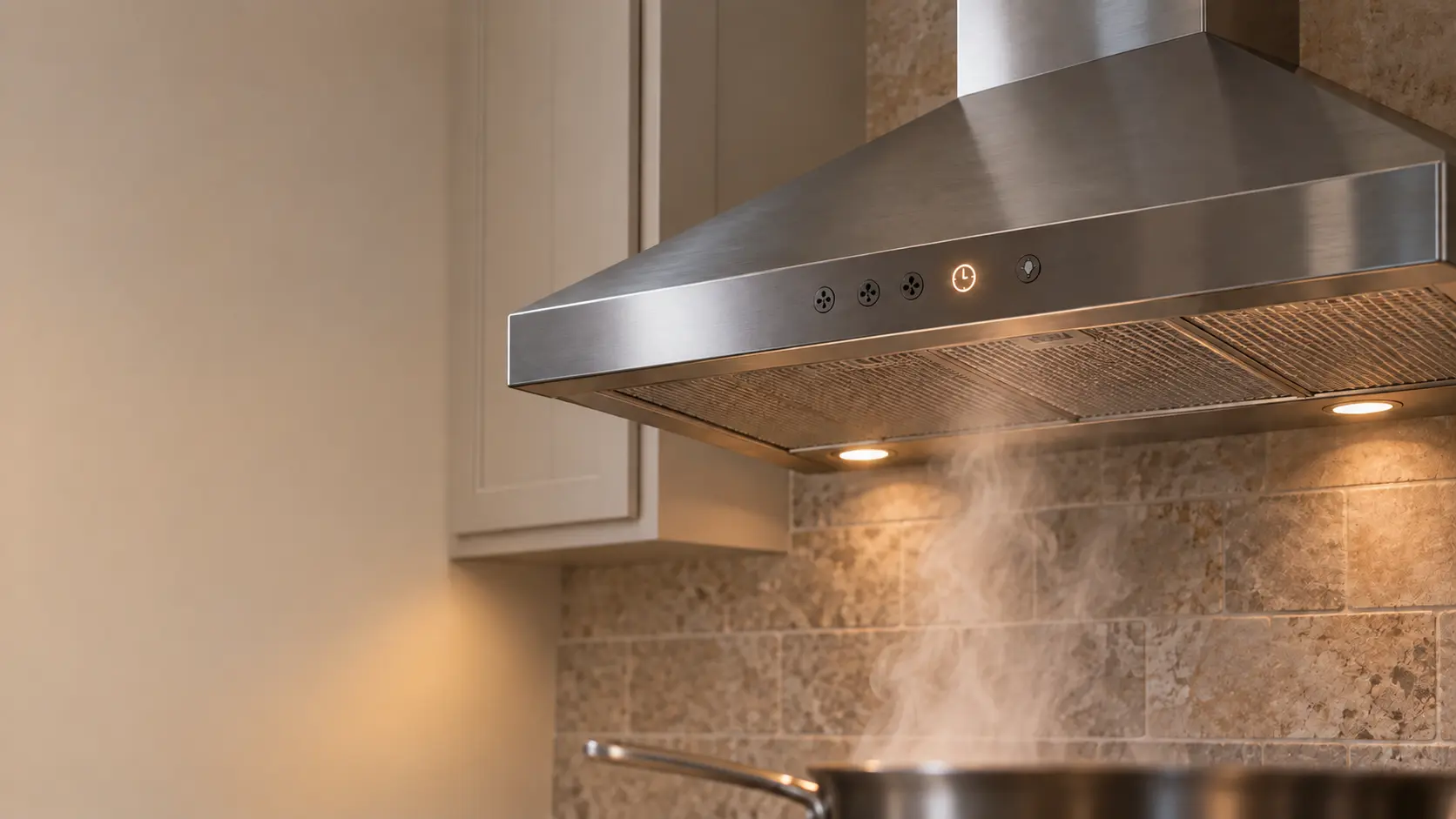
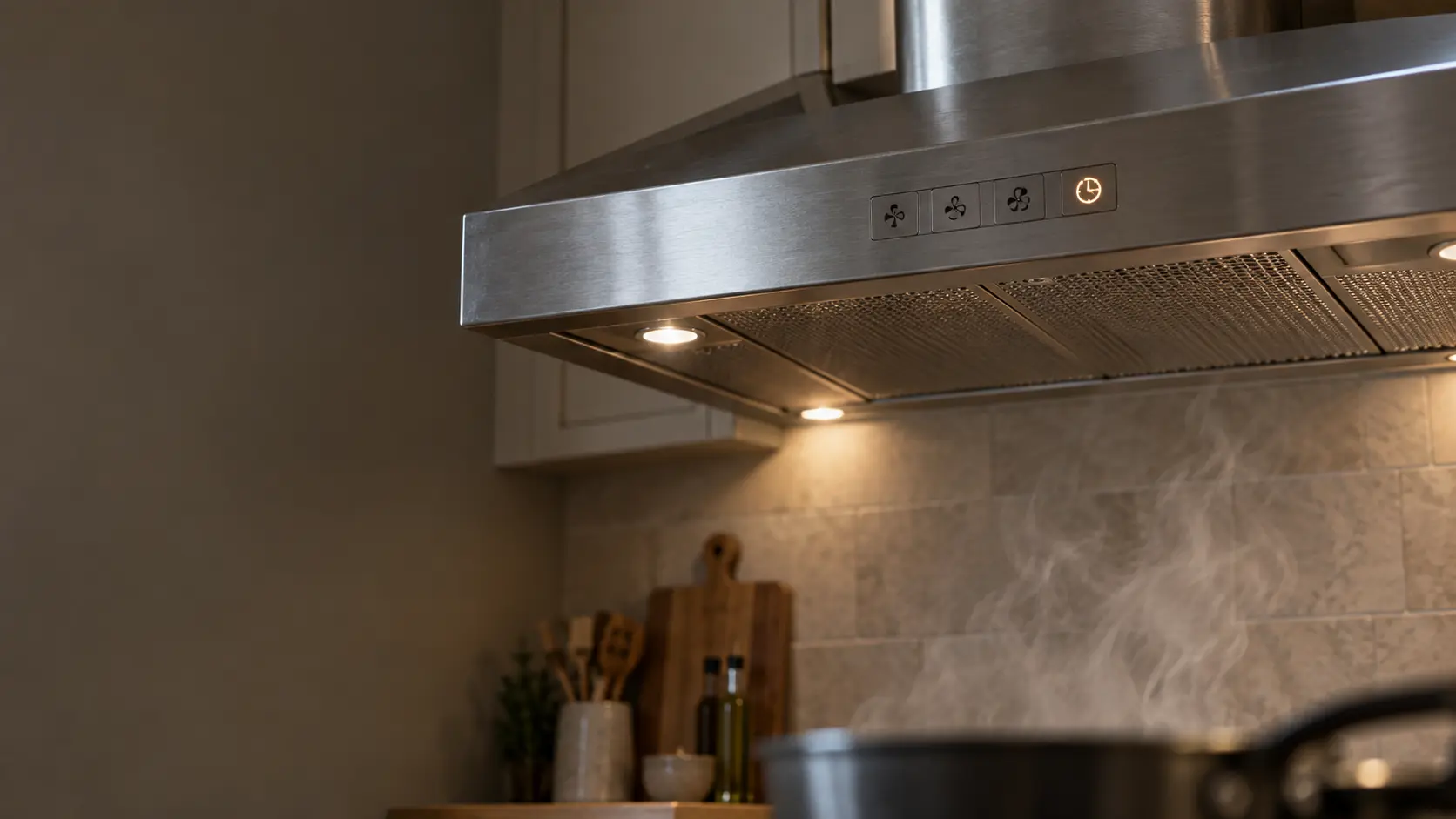

GE Profile chimney hood fan came on at MED by itself
These hoods carry a heat sensor that watches the temperature above the cooking surface.
Mon–Sat, 8am–8pm
- Mode, not a failure
- No repair needed
- Source: GE Profile
Book a visit
Three short steps, about a minute.
or call (844) 398-3217
Loading appointment form…
The appointment form couldn’t load. Please try again.
What Fan turned on by itself at MED and will not go lower
actually means.
These hoods carry a heat sensor that watches the temperature above the cooking surface. When it runs too hot and the fan is off or on LOW, the hood sets MED; you may raise it to HIGH or BOOST but not lower it until the heat falls. The button collars may stay dark meanwhile, and the hood returns to its earlier state or turns off once the sensor reads safe again.
GE Profile range hood display · also shown as heat sensor activated, collars not lit while the fan runs
What to do when Fan turned on by itself at MED and will not go lower shows on the range hoodKind of codeMode, not a failure
The hood is doing something it was told to do, not wearing out: a delay-off timer that keeps the blower running for some minutes after the burners go off, a heat sentry that starts the fan by itself when it senses a hot pan, a Sabbath setting that locks the keys and dims the lights, or a link to the cooking surface that sets the speed on its own. No part is needed; a key sequence from the manual, or simply waiting, ends it.
Usually leads toNo repair
Turn off or lower the burners and take very hot pans off the heat.
Shows up asReading a Range Hood Error Code or Blinking Light
A range hood error code may appear as letters and numbers on a display, a light that blinks in a pattern, a filter reminder that will not clear, or a beep with the fan refusing to start.
MakeGE Profile
GE Profile hoods and downdraft vents get fixed in your kitchen, starting with a check of the breaker and the hood's own switch.
SourceGE Profile chimney vent hoods owner's manual 49-2000916 (PV970, PV976)
GE Profile PV970 (30-inch) and PV976 (36-inch) wall-mount chimney hoods, owner's manual 49-2000916. The trigger temperature is printed in the guide but did not survive text extraction, so it is not given here.
Before you book,
in this order.
Each step comes from GE Profile's own guidance for Fan turned on by itself at MED and will not go lower on its range hoods. Follow it to the end: the last card says whether this is a visit.
Turn off or lower the burners and take very hot pans off the heat.
Leave the fan running; raise it to HIGH or BOOST if there is smoke.
Give the hood time to cool, then check that it returns to your setting or switches off.
If the fan stays locked at MED with the burners off and the hood cool, book a visit so the heat sensor can be tested.
Cleared?
The code is gone and the blower pulls steam up on every speed again without a new part. If it returns this week, or the filter reminder keeps coming back right after a cleaning, mention it in the booking.
What not to do
A fan that will not go below MED here is not a stuck switch or a failed board. Dark collars during this state are normal, while a single collar that stays dark when pressed in ordinary use points to a stuck button instead.
What you may
notice with it.
The range hood problems Fan turned on by itself at MED and will not go lower tends to arrive with. Answer these at the range hood before anyone is booked.
All problems
No repair indicated
Nothing to repair.
The hood is doing something it was told to do, not wearing out: a delay-off timer that keeps the blower running for some minutes after the burners go off, a heat sentry that starts the fan by itself when it senses a hot pan, a Sabbath setting that locks the keys and dims the lights, or a link to the cooking surface that sets the speed on its own. No part is needed; a key sequence from the manual, or simply waiting, ends it.
GE Profile
range hoods.
GE Profile hoods and downdraft vents get fixed in your kitchen, starting with a check of the breaker and the hood's own switch.
GE Profile range hood repairMore GE Profile codes
Mode, not a failure on other makes
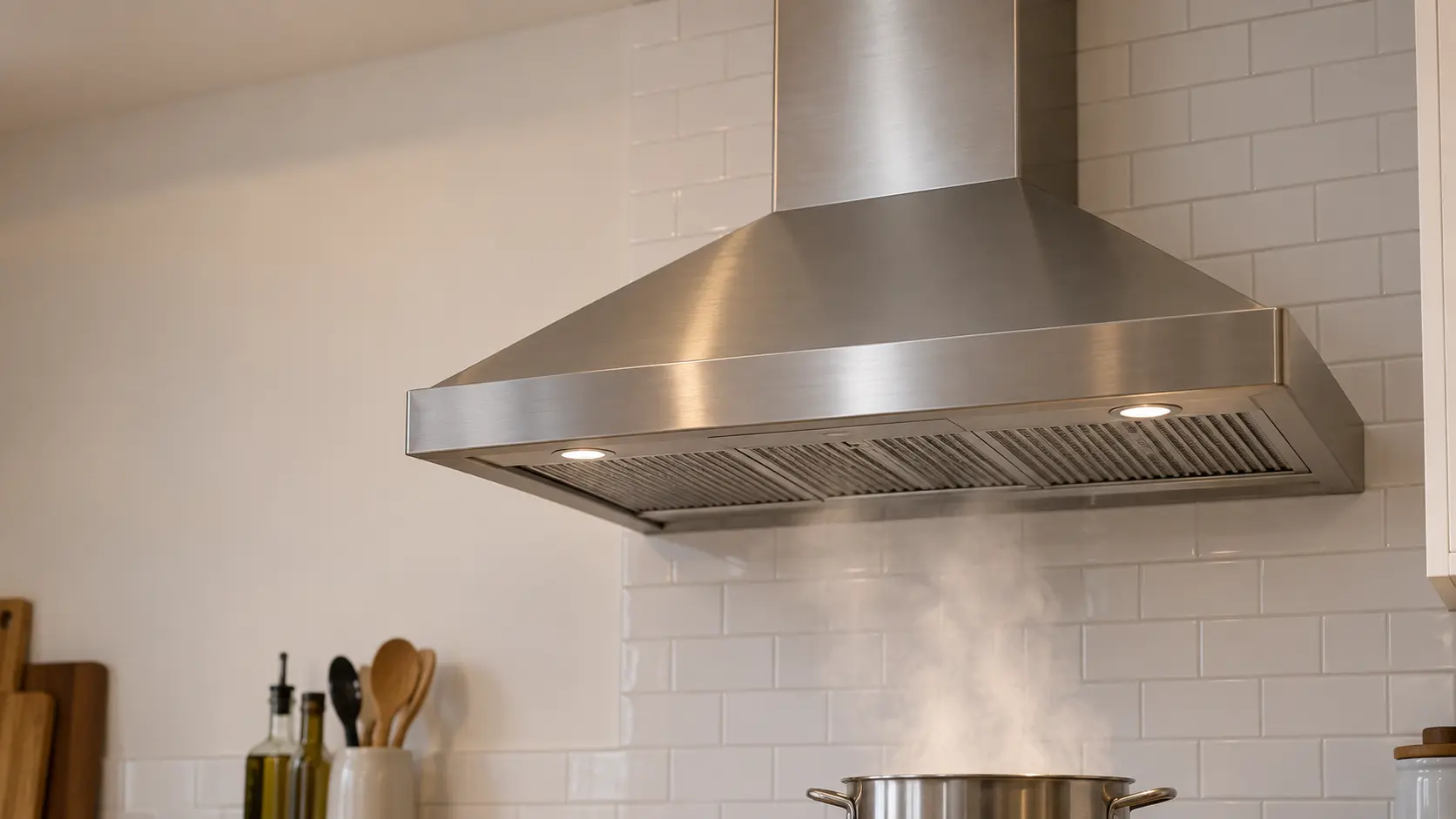
Wall-mount range hood
The chimney hood fixed to a bare stretch of wall above the burners, its canopy catching the rising smoke while a telescoping cover hides the duct that climbs to the ceiling.
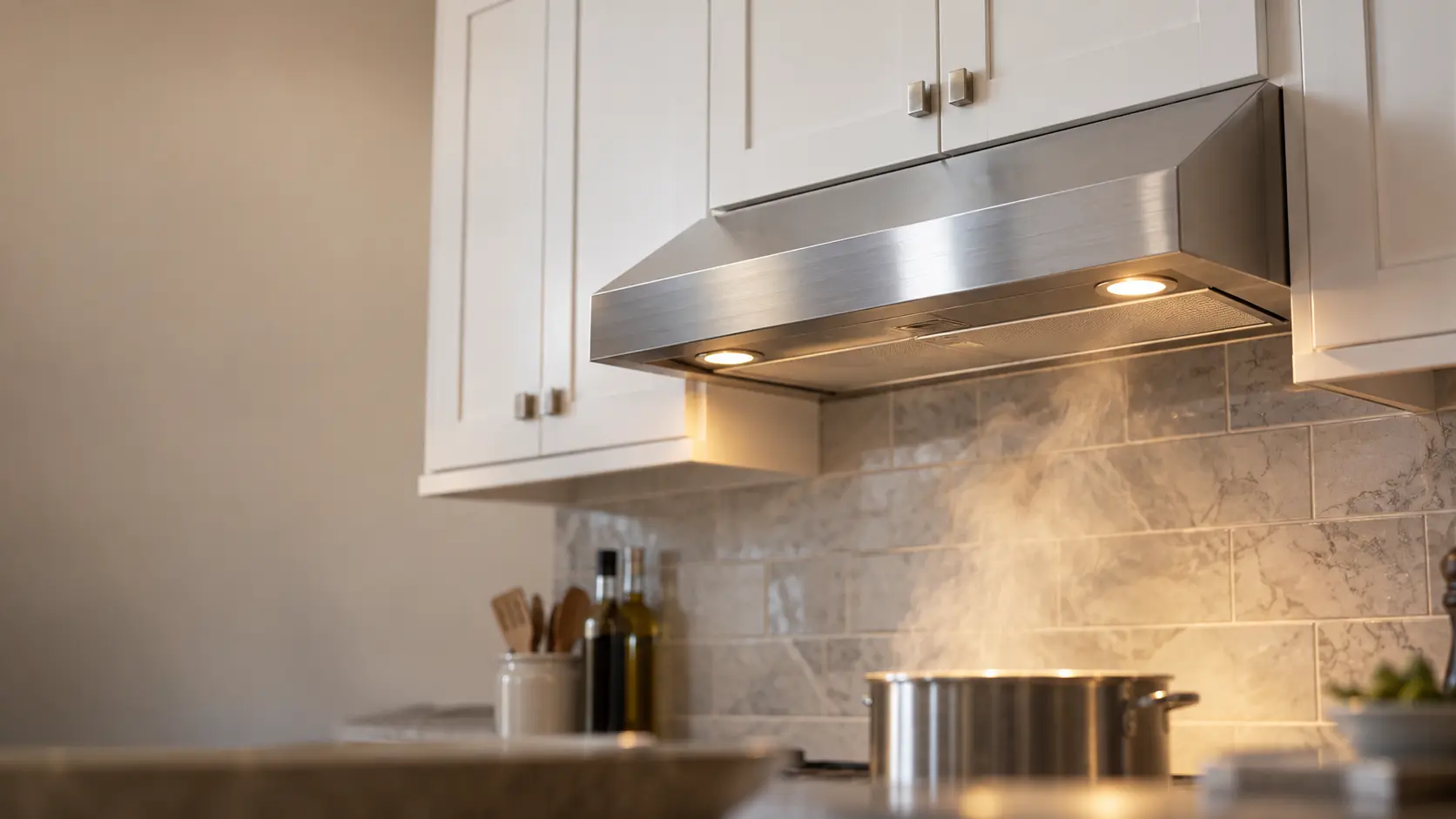
Under-cabinet range hood
The slim hood screwed to the bottom of the wall cabinet over the burners, venting up through that cabinet or back through the wall, or cleaning the air and returning it to the room.
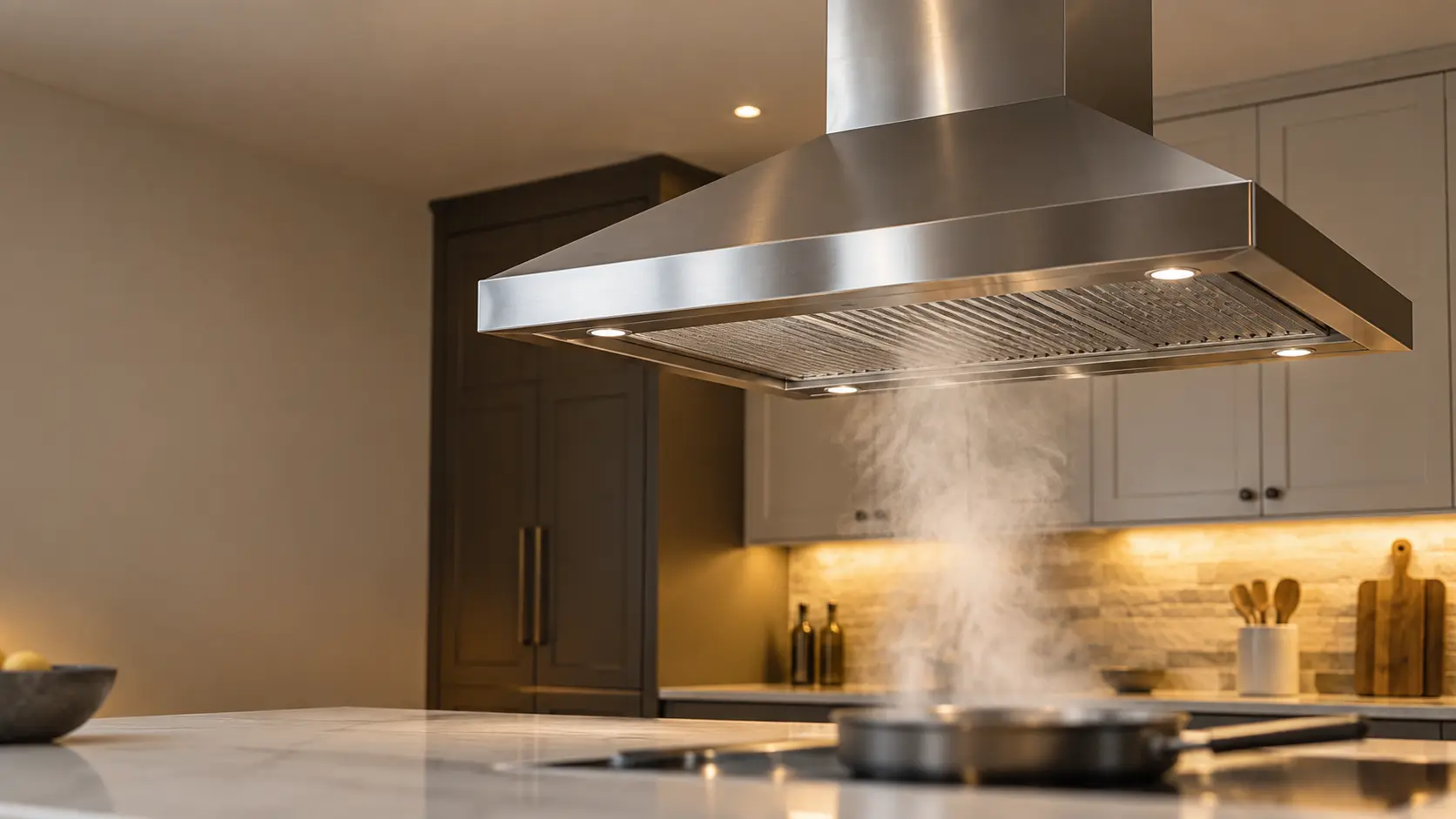
Island range hood
The hood that hangs from the ceiling over burners set into a kitchen island, open on all four sides, with its duct and wiring hidden inside a chimney that drops from above.
In GE Profile's own words
Fan turned on by itself and is in MED setting. The fan setting can be adjusted but not to OFF.
Every code on this site is taken from the manufacturer's documentation, never from a forum or a parts listing. GE Profile PV970 (30-inch) and PV976 (36-inch) wall-mount chimney hoods, owner's manual 49-2000916. The trigger temperature is printed in the guide but did not survive text extraction, so it is not given here.
GE Profile Fan turned on by itself at MED and will not go lower range hood repair,
where we come out.
The same visit in every metro below: the code, the model number, and a diagnosis before any part is ordered.
All service areasTampa BayFL · 31 areas
Miami / South FloridaFL · 47 areas
New York MetroNY · 75 areas
HoustonTX · 36 areas
ChicagoIL · 50 areas
Los AngelesCA · 95 areas
San DiegoCA · 31 areas

Questions
about Fan turned on by itself at MED and will not go lower.
Can I clear Fan turned on by itself at MED and will not go lower myself?
Why can I turn my GE Profile hood up but not down?
How long will my GE Profile hood keep running after the heat sensor starts it?
My GE Profile hood came on at MED with nothing cooking. What now?
Back to your everyday
Still showing Fan turned on by itself at MED and will not go lower?
Three things make the booking useful: the letters or blink pattern exactly as they showed, the full model number from the label behind the filters, and whether the fan still moves air on every speed. With those, the technician arrives with half the answer already worked out.