


What the hood is telling you
Common problems
guides.
What a range hood means when the smoke slips past it, the blower roars or whines, the lights go dark, or the fan switches itself on and will not stop.
Mon–Sat, 8am–8pm
- Three guides
- Read before you book
- Says where to stop
Book a visit
Three short steps, about a minute.
or call (844) 398-3217
Loading appointment form…
The appointment form couldn’t load. Please try again.
Common problems,
guide by guide.
This section starts from what the hood is doing wrong in front of you: smoke drifting past the canopy instead of into it, a rattle or a hum that was not there last month, a fan that starts or keeps running when nobody asked it to. Each guide works from that one symptom toward the handful of causes behind it, most likely first.
All 18 guides


What the hood is telling you.
A kitchen hood is simpler than most appliances, and that is exactly why its problems are easy to misread. Air has to get in through the filters, past the blower, through a flap and out along a duct to a cap on the wall or roof. A blockage anywhere on that path sounds and feels much like a tired motor, so these guides spend as much time on the path as on the parts.
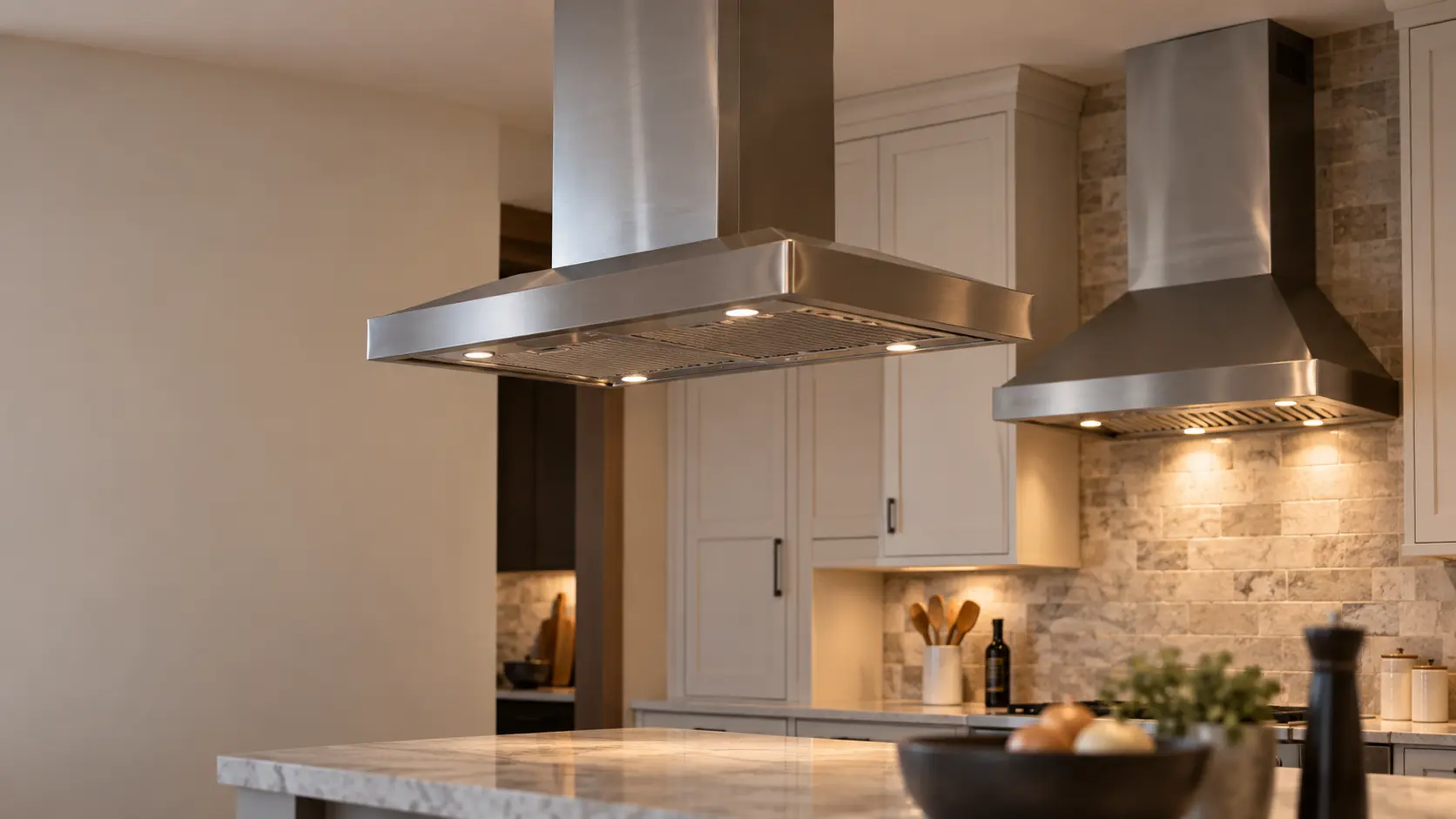
They are written for owners of every kind of hood: an under-cabinet unit below the upper cabinets, a chimney hood on a tiled wall, an island hood hanging from the ceiling, an insert hidden inside a custom wood or plaster hood, and a downdraft vent that rises behind the burners. Where the answer differs between those, the guide says so.
Every guide also marks the point where an owner's part ends. Filters, the keypad and a look from below are yours; the chimney cover, the blower housing, the wiring and anything on a roof are not. When a guide sends you to book, it tells you what to write down first so the visit starts with a likely answer.
Not sure where to start?The short answerWhy the hood stopped pulling smoke: filters, the damper and the air around it
A range hood not pulling smoke is most often choked at the grease filters, held back by a backdraft damper that no longer swings open, or fighting a cross breeze, a hood hung too high or a duct run blocked at the outside cap.
The short answerWhy a range hood gets loud: buzzing filters, a chattering flap and worn bearings
A noisy range hood usually comes down to one of four sources: a loose filter or trim panel that buzzes, a damper flap that chatters in the duct, a blower wheel that is rubbing or out of balance, or motor bearings that have worn.
The short answerWhy the hood fan runs on its own: heat sensors, delay-off and a keypad in the sun
When a range hood fan turns on by itself, the usual reasons are a heat sensor that starts the blower when the canopy gets hot, a delay-off timer still counting down, a hood linked to the cooking surface, or a touch control fooled by a spotlight.
When reading
is not enough.
If the checks in these guides did not settle it, the visit picks up from there, stop by stop.
What repairs cost- 01Airflow, speed by speed
- 02A figure before any work
- 03Common parts in the van
- 04Pulling steam before we go
The problems
these answer.
Each has a page of its own, with the causes in the order worth checking.
All 17 problems


Questions about
common problems.
Which of these problems can I usually settle without a technician?
My vent is built into an appliance that also heats food. Is it covered here?
Why do these guides keep telling me to stay out of the chimney cover?
The problem started right after a remodel. Where should I look first?
The other
sections.
Split by what you are trying to find out rather than by which part of the appliance it concerns.
All guides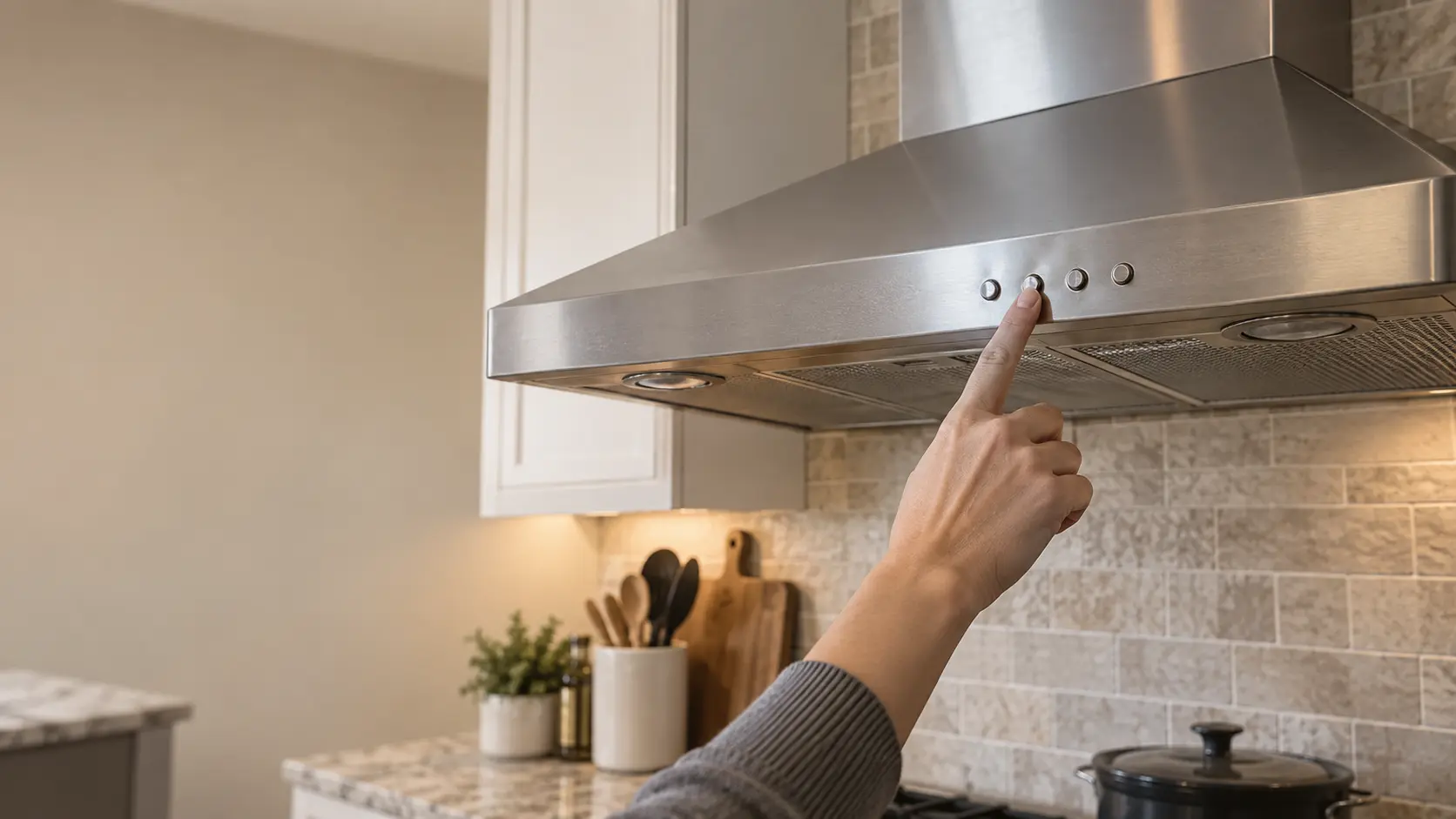



Back to your everyday
Let’s get your range hood working again.
Three short steps online, or one call. Tell us what you are seeing and pick a window that works.