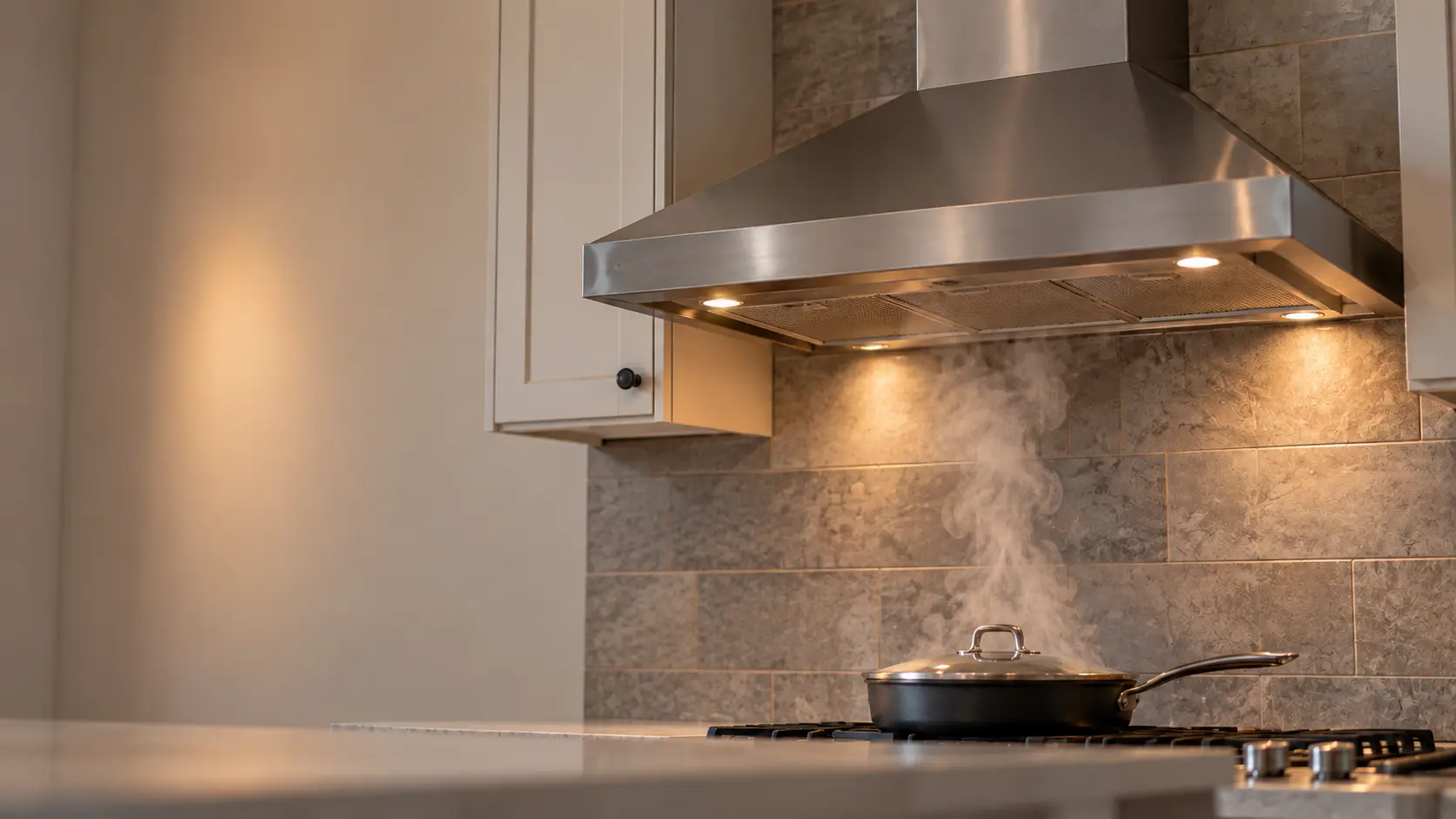
Mesh, baffle, or no filter at all
Look up at the underside of the canopy before buying any cleaner, because the three designs are cleaned differently. Most hoods carry one of the first two; a few carry neither.
Aluminum mesh
Several layers of expanded aluminum in a light frame, with a pull tab or spring latch. Grease sticks to the layers as the air twists through them. Mesh is light and reusable, but it bends easily and its layers trap fat deep inside, which is why a soak works better than scrubbing.
Stainless baffle
Heavy panels of overlapping stainless channels that force the air to change direction so grease drops out and runs to the edges. Broan-NuTone describes baffles as durable, easy to clean and highly effective at grease capture. They are heavier than mesh, so hold them with both hands when they come down.
Hoods that trap grease in the blower
Vent-A-Hood's Magic Lung blower is built to catch grease without mesh or baffle filters, collecting it in the blower housing and removable blower shields instead. Its guide says the shields need cleaning more often than the housing and may go into a sink of warm soapy water or a dishwasher, always with the power switched off at the service panel first.
How often each kind needs washing
How often to clean range hood filters has no single answer, and the makers say so honestly: grease load depends on the kitchen. Zephyr recommends cleaning grease filters monthly or more often depending on cooking style; Broan-NuTone suggests every three to six months for both aluminum and baffle filters, sooner if airflow drops or odors linger.
A household that fries, sears or cooks with a wok several nights a week belongs at the monthly end. One that mostly boils and steams can stretch toward the longer interval. Many hoods also count fan hours and light a filter reminder; Broan-NuTone says that often happens after about 30 hours of use.
- The filter looks amber or brown instead of metallic.
- Grease beads on the outside face of the filter or drips from its edge.
- Cooking smells hang in the room longer than they used to.
- The fan sounds louder or harsher at the same speed.
- The filter reminder on the control panel is lit.
Source: Broan-NuTone — Range Hood Filter Guide — Clean aluminum and baffle filters every 3 to 6 months, sooner with reduced airflow or lingering odors; indicator lights often trigger after about 30 hours of use; uncleaned filters raise fire risk; Zephyr — How To Maintain Your Range Hood — Clean grease filters monthly or more often depending on cooking style; they can go in the dishwasher on a low setting or be washed in warm soapy water

Sink soak or a machine wash
Broan-NuTone's support guidance is to soak the filters in warm water with a mild detergent, and to check the owner's manual before putting them in a dishwasher. When they do go in the machine, it asks for a non-phosphate detergent: phosphates, or local water conditions, can darken all-metal filters, though the darkening does not change how they work. Zephyr says its filters can go through the machine on a low setting.
For a sink soak, a deep basin or a large roasting pan works better than a small sink. Soak long enough for the grease to soften before touching it with a brush.
What to keep away from the filters
- Oven cleaner and caustic degreasers, which attack aluminum.
- Steel wool or scouring pads that tear mesh layers.
- A pressure washer, which folds mesh and bends baffle channels.
- Soaking a charcoal filter; it is replaced, never washed.
Source: Broan-NuTone Support — How do I clean my range hood's grease filters? — Soak filters in warm water with a mild detergent; some are dishwasher safe per the manual; use a non-phosphate detergent in a dishwasher; discoloration does not affect performance; Zephyr — How To Maintain Your Range Hood — Clean grease filters monthly or more often depending on cooking style; they can go in the dishwasher on a low setting or be washed in warm soapy water
Drying and refitting
Shake the filters, stand them on edge on a towel and let them dry completely; water left in the mesh drips onto the burners the first time the hood runs. Refit each one the way it came out. Baffles usually have a front and back and a direction the channels face, and mesh filters seat against a latch or pull tab that should be at the front.
If a mesh filter no longer sits flat, or its frame has split, replace it rather than forcing it into the channel. A bent filter lets grease slip past it into the blower, which is exactly what it exists to prevent.
Keep a spare set if your hood takes mesh. Swapping in dry filters the moment the dirty ones come down means the hood is never run bare, and the soaked set can sit in the sink for as long as the grease needs.