


Keeping people, the kitchen and the air safe
Grease, fire and air
guides.
What to do when a pan catches fire under the hood, when sparks or a burning smell come from it, when the hood starts pulling away from its mount, and how the hood keeps cooking fumes out of the air you breathe.
Mon–Sat, 8am–8pm
- Three guides
- Read before you book
- Says where to stop
Book a visit
Three short steps, about a minute.
or call (844) 398-3217
Loading appointment form…
The appointment form couldn’t load. Please try again.
Grease, fire and air,
guide by guide.
A range hood hangs directly over open heat, carries a motor and wiring at head height, and collects grease every time someone cooks. That combination produces three kinds of danger this section deals with: oil igniting in a pan beneath the canopy, a heavy hood that starts to come away from its wall or ceiling, and the quieter matter of what cooking puts into the air a household breathes.
All 18 guides


Keeping people, the kitchen and the air safe.
The guides here are written for two moments. One is the first minute after the flames or the lurch, when the reader needs the order of steps, not the theory. The other is the calm evening afterwards, when it is worth understanding why it happened, what the hood looks like when it is damaged, and what to change so it does not happen again.
The rule under all of them is the same. People come first, then the heat source or the electricity, then the appliance. For a grease fire that means a lid and the burner knob, never water, and leaving the house when the flames will not go out. For a hood that has shifted it means an empty space beneath it and the breaker switched off. Nobody in the household reaches up inside the chimney cover or unscrews the blower housing; that is where a technician's work begins.
Every instruction on fire and air is taken from the agencies that publish them: NFPA and the U.S. Fire Administration for kitchen fires and carbon monoxide alarms, EPA for nitrogen dioxide and ventilation, the Home Ventilating Institute for how hoods capture smoke, and the makers' own installation manuals for what holds a hood up. Each source is printed beneath the passage it supports.
Not sure where to start?The short answerA Grease Fire Under the Range Hood: Lid On, Burner Off, Never Water
For a grease fire under a range hood, NFPA and USFA give the same order: cover the pan with a lid or a flat baking sheet, switch that burner off, leave the cover on until the pan is cold, and never throw water.
The short answerA Range Hood Pulling Away From the Wall or Ceiling: Clear the Space Below
A range hood pulling away from the wall or ceiling is carrying its weight on fewer fixings than it was hung with.
The short answerCooking Fumes and Indoor Air: What a Vent Hood Actually Removes
The link between a range hood and indoor air quality is simple: a hood that is ducted outdoors removes cooking smoke, steam and, over gas burners, nitrogen dioxide at the source, which EPA names as the most effective step.
When reading
is not enough.
If the checks in these guides did not settle it, the visit picks up from there, stop by stop.
What repairs cost- 01Airflow, speed by speed
- 02A figure before any work
- 03Common parts in the van
- 04Pulling steam before we go
The problems
these answer.
Each has a page of its own, with the causes in the order worth checking.
All 17 problems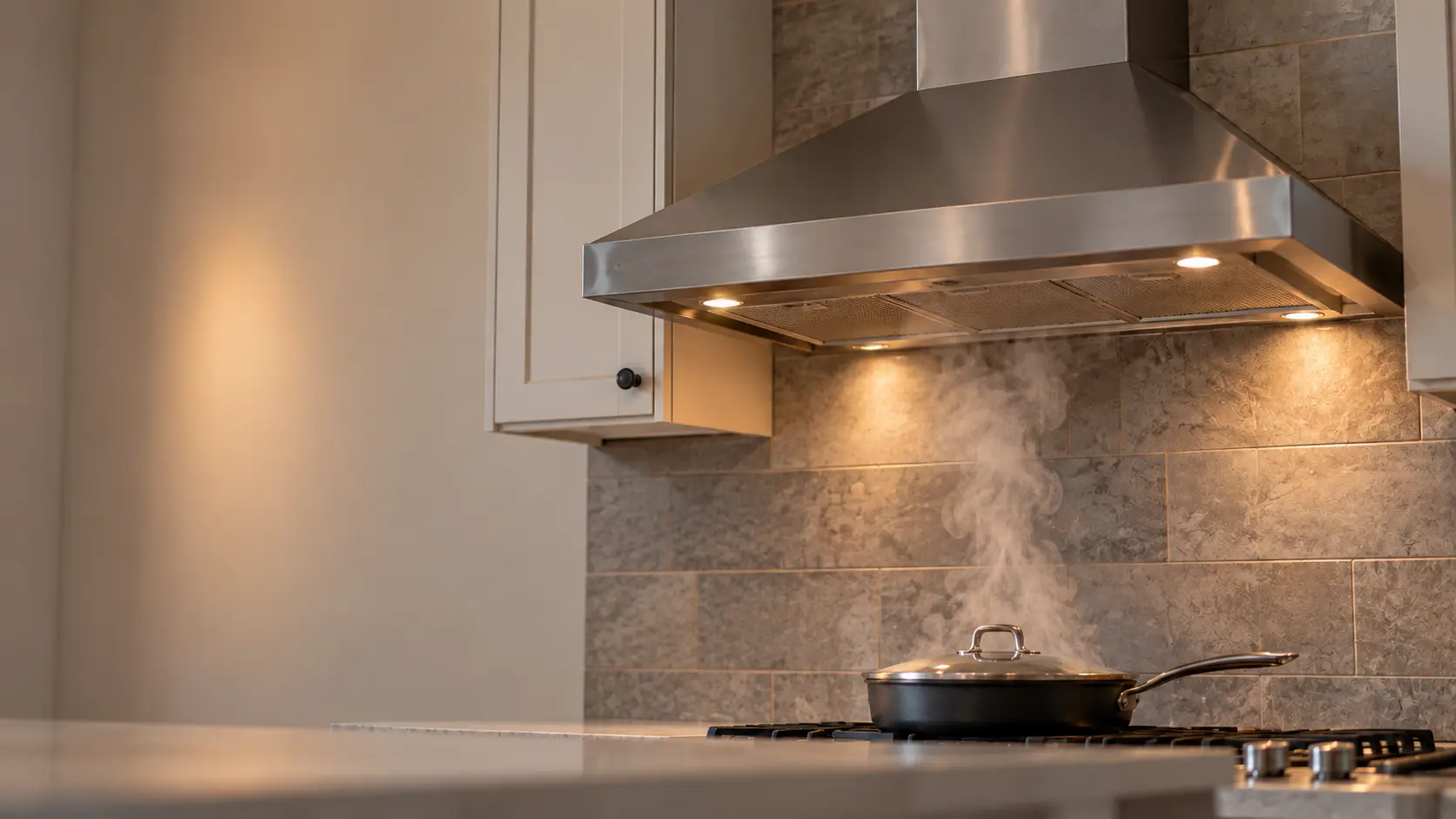


Questions about
grease, fire and air.
A pan just caught fire under the hood. What do I do?
The hood has a gap at the top and seems to move. Is it urgent?
Does a recirculating hood clean the air?
Should the hood be used after a fire was drawn into it?
The other
sections.
Split by what you are trying to find out rather than by which part of the appliance it concerns.
All guides


Back to your everyday
Let’s get your range hood working again.
Three short steps online, or one call. Tell us what you are seeing and pick a window that works.