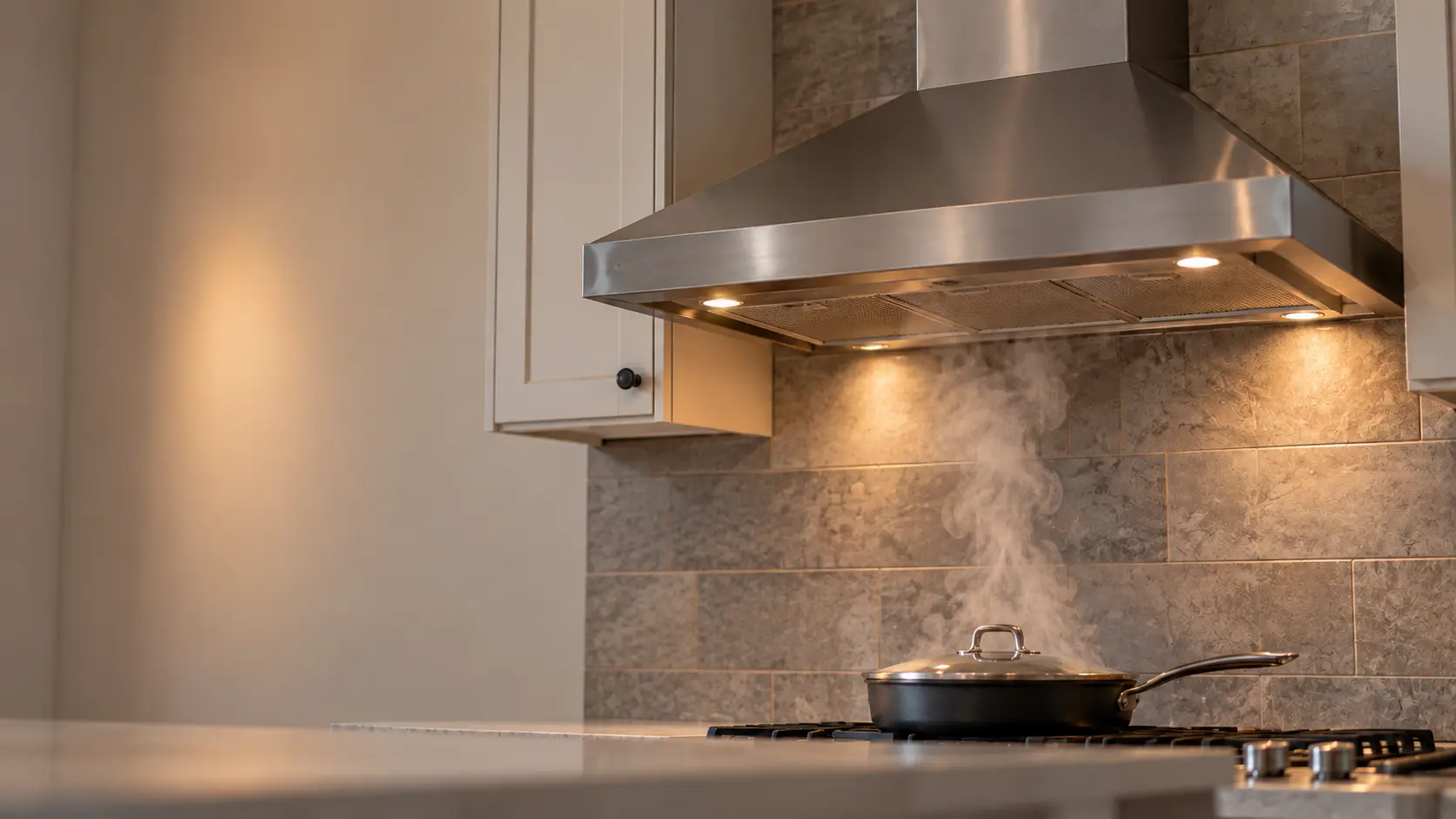
How a pan of oil becomes a fire under the hood
Cooking oil gives a warning before it ignites. It shimmers, then thin smoke lifts off the surface, then the smoke thickens and turns gray. USFA's advice is to turn the burner off the moment there is any smoke or the grease starts to boil, because the next stage is flame.
Once it catches, the flame climbs straight up toward the canopy. That is the part owners fear most, and it is why the first minute matters: a pan fire that is covered quickly stays a pan fire, while one that is fanned, moved or splashed can spread to the hood filters and the cabinets beside it.
The pan nobody was watching
NFPA puts unattended equipment behind a quarter of reported home cooking fires and half of the deaths from them. Frying is the task where that matters most, and both NFPA and USFA say to stay in the kitchen while oil is on the heat and to turn the burner off before leaving the room, even briefly.
Source: U.S. Fire Administration — Cooking Fire Safety — Turn the burner off if you see smoke or the grease starts to boil; keep a pan lid or baking sheet nearby to cover a pan that catches fire; if you leave the kitchen, turn the burner off
The first seconds: lid on, burner off
NFPA's instruction is to slide the lid over the pan and turn off the burner, then leave the cover in place, because lifting it early can let the fire start again. A baking sheet does the same job if no lid fits; USFA names it directly. Sliding the cover in from the side keeps your hand and arm out of the column of flame rising from the pan.
Leave the pan exactly where it is. Carrying a burning pan toward the sink or the back door spills oil, and burning oil on the floor or the counter is a far larger fire than the one in the pan.
- Cover the pan with a close-fitting lid; a baking sheet will do.
- Turn the burner off.
- Leave the cover on and let the pan cool for a long time.
- Keep everyone else out of the kitchen while you do it.
Why water is never the answer
NFPA says never to throw water on a grease fire, and the installation manuals that come with range hoods repeat it, adding wet towels to the list. Water sinks under hot oil, turns to steam at once and throws burning oil up and out of the pan, onto the person holding the glass and into the hood above.
Where the hood fits in
Neither NFPA nor USFA gives the range hood a role in putting out a pan fire; every step they list is about the burner, the cover and getting out. Leave the hood controls alone and put your attention on the pan and on the people in the room.
Source: NFPA — Cooking safety — Unattended equipment is a factor in a quarter of home cooking fires and half the deaths; slide the lid over the pan and turn off the burner, do not remove the cover, never throw water; if the fire does not go out, get everyone out and call the fire department from outside; close the door behind you; have a clear way out; U.S. Fire Administration — Cooking Fire Safety — Turn the burner off if you see smoke or the grease starts to boil; keep a pan lid or baking sheet nearby to cover a pan that catches fire; if you leave the kitchen, turn the burner off

When to stop fighting it and leave
NFPA draws the line clearly: if the fire does not go out, or you do not feel comfortable sliding a lid over the pan, get everyone out of the home and call the fire department from outside. Close the kitchen door behind you if there is one; NFPA notes that a closed door helps contain the fire.
Flames that reach the filters in the hood, lick around the edge of the canopy or catch the cabinet next to it mean the fire is no longer in the pan. That is the moment to go, and to call 911 from the street or a neighbor's porch rather than from the kitchen.
A clear way out comes first
NFPA adds one condition to any attempt at all: make sure others are already leaving and that you have a clear way out behind you. An island hood over a cooking surface in the middle of the room usually gives two exits; a wall hood at the end of a galley kitchen may give only one, and it should be behind you, not past the fire.
Source: NFPA — Cooking safety — Unattended equipment is a factor in a quarter of home cooking fires and half the deaths; slide the lid over the pan and turn off the burner, do not remove the cover, never throw water; if the fire does not go out, get everyone out and call the fire department from outside; close the door behind you; have a clear way out
What the hood looks like afterwards
Once the pan is cold and the room has aired, look up before cooking again. Soot on the underside of the canopy, discolored or warped mesh filters, a melted light lens or a smell of hot wiring all show how far the heat traveled.
The parts you cannot see matter as much. Flame drawn through the filters can scorch the blower wheel and the wiring around the motor, and grease already lining the duct can smolder. Broan's manuals call for metal ductwork precisely so that a fire drawn in stays inside metal.
Signs the hood stays switched off
- Filters that are bent, blackened or stuck to the hood.
- A light cover that has melted, cracked or clouded.
- Soot or scorching on the chimney cover or the cabinet above an under-cabinet hood.
- A burning or hot electrical smell that lingers after the food smell is gone.
- A breaker that tripped during the fire, or a fan that now hums without spinning.
Source: Broan — BXT1 Series Range Hood Installation Instructions — Do not use water, including wet dishcloths or towels; use only metal ductwork so a grease fire is contained inside it; do not let grease accumulate on the fan, filters or ducts; heat oils slowly on low or medium
Keeping the next one small
Grease that builds up on filters and inside the canopy is fuel waiting above the burners. Broan's safety instructions say grease should not be allowed to collect on the fan, the filters or in the exhaust duct, and they ask for oil to be heated slowly on a low or medium setting rather than at high heat.
Keep a lid that fits your frying pan within reach before the oil goes in, as NFPA and USFA both advise, and keep towels, oven mitts and food packaging clear of the burners.
Source: NFPA — Cooking safety — Unattended equipment is a factor in a quarter of home cooking fires and half the deaths; slide the lid over the pan and turn off the burner, do not remove the cover, never throw water; if the fire does not go out, get everyone out and call the fire department from outside; close the door behind you; have a clear way out; U.S. Fire Administration — Cooking Fire Safety — Turn the burner off if you see smoke or the grease starts to boil; keep a pan lid or baking sheet nearby to cover a pan that catches fire; if you leave the kitchen, turn the burner off; Broan — BXT1 Series Range Hood Installation Instructions — Do not use water, including wet dishcloths or towels; use only metal ductwork so a grease fire is contained inside it; do not let grease accumulate on the fan, filters or ducts; heat oils slowly on low or medium