
What does "convertible" actually promise?
A convertible hood promises one thing: the housing can send air out through a duct or back into the room. It is a statement about the shell, not about what ships in the box.
The two modes in plain terms
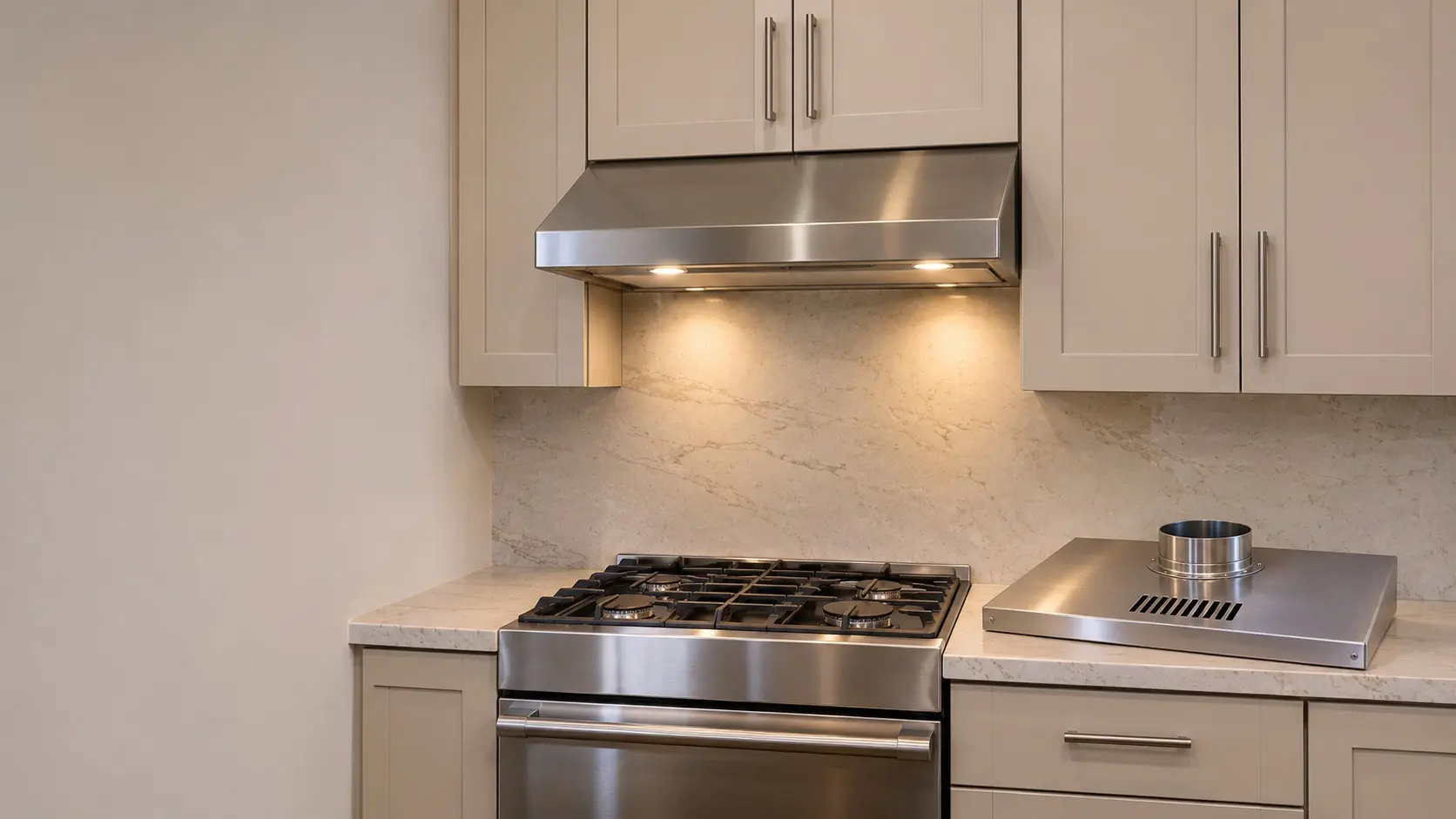
In ducted mode the blower pushes cooking air through metal duct to a cap outside. In recirculating mode, sometimes called ductless, the air is pushed through a charcoal filter and returned to the kitchen through a vent slot or grille on the hood. Many convertible hoods leave the factory set up for ducting, with the ductless parts as an add-on.
What is usually missing
Read the parts list in the owner's manual before you buy, because many models list the charcoal filters and the recirculating kit as accessories. Look for three items: the charcoal filters themselves, a diverter or top cover that opens the air path toward the room, and, for ducted use, the transition from the blower outlet to a round duct. Counting these at the shelf is cheaper than discovering a gap on installation day.
Which kit does each mode need?
Each mode needs a different set of parts, and mixing them up is the commonest reason a new hood performs poorly.
Ducted kit
A ducted setup needs rigid or semi-rigid metal duct of the diameter the hood's manual names, a backdraft damper so outdoor air does not fall back in, and a wall or roof cap. Manuals for many hoods say not to vent into an attic, a wall cavity or a garage. The air has to leave the building.
Recirculating kit
A recirculating setup needs the charcoal filters, the mounting for them, and the vent path into the room. Grease filters stay in both modes; the charcoal sits behind them or on top of the blower and takes odor from the air. Because charcoal fills with grease and odor, it is a part you replace, not a part you wash.
| Item | Ducted | Recirculating |
|---|---|---|
| Metal duct and cap | Needed | Not used |
| Backdraft damper | Needed | Not used |
| Charcoal filters | Not used | Needed |
| Room-side vent opening | Closed | Open |
| Grease filters | Needed | Needed |

How much cooking air does each mode clear?
Ducted mode removes heat, moisture, smoke and grease along with odor; recirculating mode mostly removes grease and odor and hands the rest back to the room.
EPA's indoor air quality guidance lists outdoor-vented kitchen fans among the ways a house is mechanically ventilated, because they remove air from the room; a hood that returns air to the kitchen removes nothing from the house. Searing, frying and boiling for a long time put steam and combustion by-products into the air, and charcoal does not take those out.
What to expect from recirculating
Many manuals quote a lower airflow figure for the recirculating setting than for the ducted one, because the charcoal adds resistance. In practice the kitchen is less smoky at the hood, the windows still fog during a long boil and the smell fades faster than the heat.
When recirculating is the right call
It makes sense where a duct cannot reach outdoors:
- a rental, where the landlord will not allow a hole in the wall
- a condo with an interior kitchen and no outside wall nearby
- a wall or floor with a structural obstacle in the path
The trade is plain: you gain an easy install and lose heat and steam removal. In a kitchen with a gas stove that gets daily frying, a duct is worth finding a path for. Our guide on ducted or recirculating hoods compares the two in more detail.
Can you start recirculating and switch to ducted later?
Yes, usually, if you keep the manual and the parts, and if the wall or cabinet can take a duct. Plan for it before the cabinet is painted.
- Keep the duct transition and the top plate that came in the carton, because the model may need them later.
- Mark where the duct would exit and check that nothing inside the wall blocks a round path of the diameter the manual names.
- Leave the cabinet side or top uncut until you decide.
Moving from ducted to recirculating is easier and reversible, since it only adds filters and opens the room-side vent. Going the other way means cutting. If a hood already has a duct run, a stuck backdraft damper is a common source of cold drafts and flapping that a conversion can expose.
What does a convertible hood need in maintenance?
Both modes need clean grease filters; recirculating mode adds charcoal that has to be replaced on a schedule.
Wash metal mesh or baffle filters as described in cleaning mesh and baffle filters. Charcoal filters cannot be washed; the schedule in when to change charcoal filters applies, and a charcoal pad that has not been changed will make the hood smell instead of cleaning the air. If you prefer to hand the swap to someone, the filter and baffle service covers it, and a ducted run that has gone weak is handled by the damper and duct repair service.
Matching the hood to the stove
Size matters in either mode. A hood sized for a small stove will not keep up with a larger one, and sizing a hood and its airflow explains the numbers to compare. If a new hood feels weak right away, check the setup first and read why a hood stops pulling smoke before blaming the motor. A diagnostic visit separates a setup problem from a part that has failed.


